St Leonard’s College Travel Award student recipient reports (2022-2023)
See how our St Leonard’s travel award has benefitted students with their studies.
Valerie Cranmer, PhD Candidate, School of History
The travel fund helped reimburse my travels to the U.S to do research at the National Archives. While there, I was able to access about 20 boxes worth of documents, showing the development of the first national military sanitation school, original tables of organisation and equipment for reserve sanitation officers, and requests to form permanent sanitation unites after World Wars.
I am still sifting through hundreds of documents that I took pictures of to help guide specific arguments about my dissertation, since my time at the Archives was brief and I prioritised picture taking over studying the documents. I anticipate that this research will form the core of two of my chapters within my dissertation.
Dheirya Kalpesh Sonecha, PhD Candidate, School of Chemistry
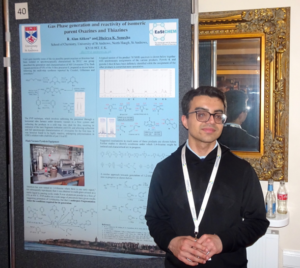
The financial assistance provided by this award helped in attending the 25th Lakeland Symposium held in Grasmere from the 7th to 11th of May 2023. This symposium was organised by the Heterocyclic and Synthesis Group of the Royal Society of Chemistry.
Attending this conference granted me the opportunity to interact with several noted and lauded minds in organic and heterocyclic synthesis which form a core part of my research project. By presenting my work at the poster presentation in the symposium and garnering valuable feedback from a varied organic chemistry audience, I was able to devise new and better ways of continuing to pursue my project. Learning the different kinds of chemistry carried out granted a large amount of exposure that I lacked in terms of future prospects. Talks by industrially affiliated chemists also gave a detailed look into what goes on outside of academia and how process optimisation works on a larger scale. As my first conference experience, it also brought about some development in social skills boosting my ability to interact with people of similar and much higher intellectual ability than myself. this golden opportunity for networking for the future at the conference was justifiably exciting.
I must thus thank my supervisor Dr R. Alan Aitken and also St Leonard’s Postgraduate College for having enabled this opportunity for me.
Nick Kuespert, PhD Candidate, School of Philosophical, Anthropological and Film Studies
Towards the end of my third year in the PhD, I planned a research visit at Harvard University to both draft two new chapters of my dissertation as well as to finalise the chapters I already drafted in St Andrews. In particular, I intended to work with Zoë Johnson King on a a chapter on moral motivation when it comes to moral testimony and a second chapter developing a novel argument in favour of optimism about moral testimony, the position my thesis as a whole defends.
Overall, my research stay was very successful. Regarding the chapters I intended to work on, I was able to meet with Zoë Johnson King on a biweekly basis, discussing my ideas and working on editing the chapters. In addition, I also met with other research students and faculty to discuss how the contents of my thesis relate to their current research projects. This broader context was further nourished by my participation in the research seminars at Harvard University where I regularly attended classes on inquiry and self-knowledge, both of which benefitted my thesis as a whole.
I also participated in regular work in progress sessions at Harvard geared towards research students like myself, presenting my own and thus utilising a great research environment to gather further feedback on the ideas I was developing. Last but not least, I utilised the extracurricular resources Harvard University provides, becoming actively engaged in the climbing wall project located in on of the recreational faculties at Harvard University.
Of course, a research stay in the US comes with significant additional costs, including primarily travel, accommodation and the remaining costs of living. I was lucky to receive generous founding from by the Arché Philosophical Research Centre as well as the St Leonards College, which helped me to cover these costs to some degree.
Amelia Ritter, MLitt Art History
Thank you to St Leonard’s Postgraduate Travel Award for allowing me to be able to attend ‘The Art and Architecture of Mapping: Visual and Material Approaches to Cartographic Objects’ conference in London. The conference lectures covered a range of map locations and topics from water table maps in Istanbul, to fengshui maps of Qing China, to an in-depth look at the Blathwayt Atlas. Not all of the lecture topics pertained specifically to my research but they were still extremely understanding and I was able to gain from viewing current research, references used, and methodologies used by my academic contemporaries. My dissertation is specifically researching maps of Scotland from 1580 to the 1700s with sea monsters and ship depictions. I was able to network and discuss my dissertation topic with other researchers in my field and receive feedback and literature suggestions, which was invaluable.
While in London I went to Shakespeare’s Globe Theatre twice in my free evenings, once to see Midsummer’s Night Dream and once to see Comedy of Errors. I was able to view medieval manuscripts and atlases referenced in my dissertation firsthand at both the British Library special collections and National Maritime Museum’s Caird Library special collections. Viewing these in person aided in my dissertation research and allowed me to see my maps in more detail. It also allowed me to strengthen my skills in archival research. Documented familiarity with archival research will be an asset when I pursue an academic career beyond my MLitt degree. Without the St Leonard’s Postgraduate Travel Award, I would not have been able to afford this crucial trip. Thank you!
Sahngmin Shin, PhD Candidate, School of International Relations

By attending the Doctoral Training School, which was held by the The Centre for Research into Information, Surveillance, and Privacy (CRISP) from 19th-23rd June 2023, three expectations were accomplished: building a network and contributing to PhD community, gaining insight from research and gaining relevant skills to become a professional researcher.
Building a Network and Contributing to PhD community
The attendants at CRISP’s Doctoral Traning SChool were diverse. For the regional level, the PhD students from the UK universities from Cambridge, Reading, Edinburgh and Sheffield, and all around the EU – Belgium, Netherlands, Ireland, North America – Canada, and the U.S. Also, their academic backgrounds include sociology, communication, public policy, and computer science. I had great conversations with them about research, domestic/international context, methodology, the supervisory team, different PhD program systems, careers and funding.
Becoming a Professional Researcher
Sessions provided me with practical guidelines for publishing and funding “Bidding for Research Funding”, “Publishing in Top Journals”, “Difficult Research Environments” and “Research Design Dilemmas”. By all lessons from these sessions, each team had to do a 20 minute presentation of a research proposal prepared within 24 hours. It was “The Epic Research Proposal Workshop”. This workshop provided traning in practical writing and research strategies with the interdisciplinary team. My team was awarded the winner of the CRISP Doctoral Training School Epic Proposal by reflecting on each other’s specialities in our proposal.
Gaining Insight for my Project
“Three minute thesis” helped me to approach my project different lens. I gained ideas for methodology and broadened my understanding of other disciplines’ primary debate. The whole procedure of the Three Minute Thesis helped me to consider the essence of my research and how to delivery the primary debate with appropriate language to an audience with different academic backgrounds, even from preparing presentation slides. Also, feedback from the audience helped improve my research. For example, one of the questions was whether my research handles social media companies’ commercialisation. The invisible border of commercialised social media companies might be challenging to research when approaching those corporations with International Relations states border centered ideas. I will consider this comment and how to apply it to my research.
With these experiences, knowledge, and networks, my research and myself as a researcher will improve.
Ella Wood, PhD Candidate, School of Geography and Sustainable Development
I am incredibly lucky to have had the opportunity to attend the Global Artic Summer School in Svalbard with the Norwegian Polar Academy. This was a 10-day intensive workshop for early career researchers from different disciplines of polar research. Svalbard is a remote group of Islands in the Artic Circle governed by Norway, we spent our time there split between the University Centre in Svalbard (UNIS) in the town of Longyearbyen and the remote island Isfjord Radio Station outpost.
The focus of the course was to explore the linkages between High Mountain Asia and the Artic and the tole of the ‘Third Pole’ in the field of polar research. My background is in mountain glaciology, with my PhD research investigating the hydrologic significance of rock glaciers in Central Asia. I was extremely keen to see how my research might fit into this ‘global artic’ narrative and contribute my insights into water resources and permafrost hazards in third pole region. The course was made up of students from a diverse range of research backgrounds and geographic locations, the 18 students on the course represented 15 different countries with me representing the UK.
Throughout the week we had many fascinating lectures and discussion, some highlights included: How the was in Ukraine is affecting Polar Military Geopolitics, Too Much or Too Little Water in High Mountain Asia and a lecture from the legendary Thor Lassen on the International Polar Bear Agreement as an example of the science diplomacy. We also had the opportunity for some field excursions (with some incredible sunshine) to see the amazing landscapes and wildlife of Svalbard and a course on polar bear protection and safety in the Artic!
The experience really forced me to challenge the way I think and question how my background and traning determines the way I approach research. Being able to work as part of an interdisciplinary group is a key skill for researchers and I hope it is something I will continue to develop throughout my PhD. The opportunity to work with these inspiring researchers has also given me a really valuable insight into what it is to be an early researcher, how to conduct good research and how to make the most of you PhD. We will continue to work together as a group over the next year or an interdisciplinary research paper focusing on an interdisciplinary research paper focusing on the links the Artic and the Third Pole, developing the ideas we discussed during the course. The process of writing this paper will be an invaluable learning experience for me in the first year of my PhD!
I am extremely grateful for the financial support to cover the costs of attending the course which has enabled me to have this incredible experience.
Alejandra Pizarro Choy, PhD Candidate, School of Geography and Sustainable Development
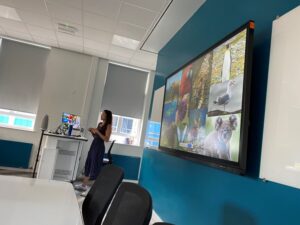
The St Leonard’s College Travel fund supported me to travel to Sheffield between the 15th and 16th of June to attend the 2023 Political Geographical Society Research Group Conference. During the Conference I attended presentations from political geographers from all around the world and also got the chance too reflect on my research and where it sits within the field. I also presented my PhD research titled “The geographical ecology of conservation funding: Discourse and power in counter wildlife trafficking programmes in Peru” within the panel session on “Ecology, Environmental, Anthropocene Political Geographies.” This gave me an opportunity to receive feedback on my results and engage in discussions to develop my arguments, which is contributing to writing and finalising my dissertation.
The conference allowed me to network within my chosen sub-discipline and to meet with other researchers based in Sheffield to discuss my project and think through my arguments. Since it is my past year of the PhD, I am also looking for postdoc or reserach associate positions for after I submit my dissertation so attending this Conference allowed me to start my career development process and possibly to be included in further projects and funding.
Shulamit Löwensteijn, MLitt Global Political Thought
In May of 2023, I travelled to Amsterdam, the Netherlands, to conduct research for my MLitt Global Social and Political Thought dissertation. The dissertation goes into the effect of racism on the feminist movements in the Netherlands from 1960 to 2022. There were tow goals of my trip, and I was able to fulfil both due to receiving funding from the St Leonard’s College Travel fund. In the first place, I came to the Netherlands to visit archive of atria, the Knowledge Institute for Emancipation and Women’s History. For two days I was allowed to dive into letters, memos, books, articles and ticket stubs of the feminist groups from the previous decades. The wealth of information available only in person has been incredibly helpful for my research project and would not have the same depth without it.
Secondly, with my coming to Amsterdam, I conducted four interviews with activists from diverse backgrounds that have been active then and now. These interviews have given me amazing insights into the experiences of the feminist movement from the 1970s to a couple of weeks ago. The women interviewed have contributed greatly to my research which will help fill a significant academic gap. Without my trip to Amsterdam, which would not have been possible without funding, my end of degree research project would have had significantly fewer primary sources as well as less impact.
Mary Abed Al Ahad, PhD Candidate, School of Geography and Sustainable Development
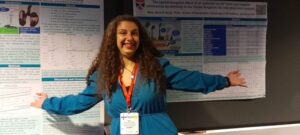
Attending the Population Association of America (PAA) conference in New Orleans, USA in April 12th to 15th 2023 was very important for my PhD studies as it provided me with the opportunity to present my PhD work to an international audience. Due to COVID situation, most of the previous conference presentations that I attended were online, which did not allow for good networking. Thus, attending this in-person conference provided a good networking opportunity that advanced my present and future research career. I also got valuable feedback on my PhD research from experts in the field of environmental science and population health, which helped in finalising my PhD thesis and gave me ideas for future research projects post PhD. Due to this conference, I established connections with international researchers from different countries and organisations including Max Planck Institute for Demographic Research (Germany), Stockholm University (Sweden), INED (France), Bologna University (Italy), Cambridge and Oxford Universities, (UK), and New York University (United States). I also learned in the PAA conference about opportunities for more training and quantitative analysis (egg: ICPSR summer program in quantitative methods at University of Michigan, United States of America) and on new data repositories that can be used in future research such as the Platform for Population Survey Data on Ageing. I am very grateful to the St Leonard’s travel fund for providing me with the opportunity to present my research at PAA 2023 international conference.
Parker Haratine, PhD Candidate, School of Divinity
The following is a written report of the research trip to the University of Helsinki that was recently awarded funding. I took this research trip in February to the University of Helsinki and presented some of my doctoral research a an analytic theology workshop on the topic of sin.
The analytic theory workshop on sin was very fruitful for my research. My PhD degree is in analytic theology, and my research is on the topic of sin. I collaborated with a variety of scholars at the seminar and made professional connections that continue to be fruitful today. For example, because I attended this seminar, I recently convened a panel at the European Academy of Religion on the topic of sin and responsibility. The panelists included researchers from the University of Helsinki who were also present at the February workshop on sin. While at the workshop in Helsinki, I presented a portion of a dissertation chapter on the doctrine of original sin. Because the format was one in which the papers were pre-read, the feedback was constructive and the quality of comments was exceptional. After this presentation, I revised my dissertation chapter and integrated the relevant feedback and insights.
The funds that St Leonard’s College awarded helped to reimburse the additional costs incurred that the divinity school was not able to cover. This includes but is not limited to airfare, lodging and food. While my own school’s bursary was able to cover the airfare, I had to cover the other expenses out of pocket. I am, consequently, very, grateful to be awarded this scholarship as it helps further pursue my academic work.
Vendela Angerlöv, MLitt Art History
I want to thank the College for their generous and helpful award for my exchange semester at École du Louvre, Pairs. St Leonard’s College Travel fund truly enabled me to pursue this project since the living costs in Paris are significant.
My time in Paris was incredibly valuable and taught me about French museology and art history. The topic of museology is part of my MLitt Art history dissertation which discusses art funds’ positive contribution to the art world. Since art funds has a tradition of lending their investments (artworks) to museums. museology is a topic discussed through my dissertation, arguing that art funds enable the positive aspects of museology, such as public education and inclusion. The professors, museum visits and research materials from the École du Louvre have been invaluable in this aspect, giving me a broad and deep knowledge of museology to include in my research project.
Zoe Barr, PhD Candidate, School of Biology
Lab visit to University of Leeds
Plasmodesmata are membrane- line channels spanning the plant cell providing cell to cell connectivity. Thanks to this connectivity plant cells are able to pass signals and nutrients but pathogens (including viruses) are also able to pass. The structure and regulation of these channels is not well characterised with large consequences for agriculture. Therefore, my PhD project focuses on investigating the role of a plasmodesmata component (HIPP7).
During my PhD project I found increased levels of HIPP7 causes the cells to be less connected. A central dogma of plasmodesmata regulation is the build-up of callose (a cell wall component) causes a narrowing of the channel. To investigate why the increased levels of HIPP7 caused decreased connectivity, the levels of callose must be quantified. Several different techniques were trialled in the laboratory here, but due to limitations of the techniques no reliable data was produced. A technically advance, highly-reliable technique for callose quantification is immunostaining. Immunostaining requires specialised sample preparation and specific antibodies. Based at the University of Leeds, Dr Benitez-Alfonzo’s group specialise in cell wall components and callose quantification. Following discussion of the interest in the project data and the limitations of other techniques, a visit to learn immunostaining was suggested. The opportunity was arranged quickly and thanks to the St Leonard’s travel fund was possible.
The visit resulted in the opportunity to learn a new, advanced technique that required lengthy laboratory skills traning including wax embedding, immunostaining and high-though put image analysis. I have been able to repeat the techniques for application to other methods throughout my remaining PhD and beyond. Quantification of callose levels was achieved and publication quality data produced. The initial investigation to better characterise previous data was met but most interestingly a new hypothesis and direction for research as been proposed as a consequence of this callose analysis project.
Furthermore, the collaboration with the visited lab is ongoing. Methodological transfer between institutes was successful and the technique is being implemented in our own laboratory. Visiting another institute was a highly valuable experience for personal development as a researcher and was a valued step in a preparation for further academic career.
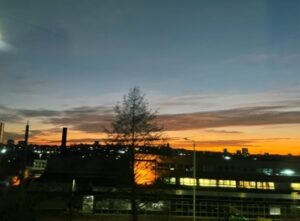
A lovely view walking back to the lab.
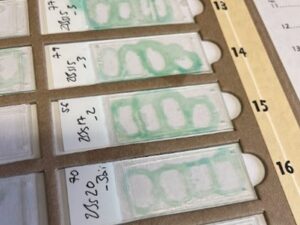
Immunostaining in progress.
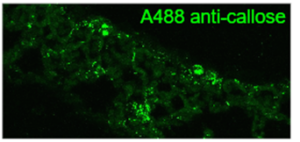
Example of final confocal microscopy image.
Muriel Gévaudan, MFA Creative Writing
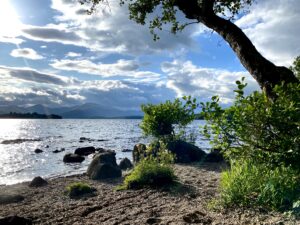
I used my St Leonard’s Travel award on 12-13 July for a trip to Balmaha, Glasgow by Loch Lomond to do some location research for my dissertation. I am writing a literary fiction novel that revolves around a trip through Scotland, and my main characters stay in Balmaha for a few days. During my trip, I took a walk along the east shore of the loch, a Loch Lomond boat trip that led through the famous ‘Narrows’, and a hike up Conic Hill. Either two or all three of those will be featured in the final product of my dissertation. I ahve already written a good amount of pages about the boat trip as well as the eastern shore of the loch since.
I spent the money awarded to me on one night in a guest lodge in Balmaha, train travel to Balloch, bus travel to Balmaha as well as subsistence.
Photos from the trip:



Di Wu, PhD Candidate, School of Computer Science
My name is Di Wu, a third-year PhD student at the School of Computer Science. My research focuses on federated learning (FL) at edge computing systems, with a specific emphasis on developing efficient and privacy-preserving machine learning algorithms that can be deployed on edge devices. FL is a vital component of my research as it facilitates collaborative model traning without centralising data storage.
Recently, I have successfully applied and received the St Leonard’s College travel grant. The grant provide £125 for partially covering the travel cost for attending the 2023 Flower Summit. I would like to express my gratitude to St Leonards’ College for their support, which allowed me to attend the Flower Summit.
Flower Summit is an annual conference organised by the University of Cambridge. Led by Professor Nicolas Lane, a prominent researcher in FL, the summit brings together experts from academia and industry to exchange research findings, discuss emerging trends and challenges, and share best practises. The Flower Summit for this year is successfully hold in Cambridge on May 30 and 31, 2023.
During the Flower Summit, I actively participated in keynote speeches, workshops and networking sessions which had three significant positive impacts:
Knowledge enrichment: Attending the summit provided an opportunity to learn from insightful keynote speeches delivered by leading researchers in the field. For instance, Dr Tian Li, a prominent researcher, shared the latest research opportunities in FL. Workshops also allowed me to explore the latest tools for development efficient FL systems using the Flower framework.
Collaborative Connections: The networking sessions facilitated connections with esteemed researchers and industry professionals. These connections opened doors for potential collaborations and knowledge exchange. For example, I had an engaging conversation with Dr Ullauri from the University of Bristol, who works in a similar area and even invited me to apply for their lab’s Postdoc position.
Insights for Real World Application: The Flower Summit provided valuable insight into the application of FL in real-world scenarios. The industry session on the second day offered a deeper understanding of the challenges of implementing FL in practical sessions. These insights directly influenced the advancement of my research, enabling me oto develop innovative approaches aligned with real world application needs.
I express my sincere gratitude for the support received, as it significantly contributed to the success of my research project on FL at edge computing systems.
Bridget Hardiman, PhD Candidate, School of Art History
The St Leonard’s College Travel Grant supported a ten day research trip to Paris, France in June and July of 2023. I conducted original research that will contribute to a dissertation chapter on photography by Denise Bellon (1902-1999) during the Second World War. This research resulted in new insight into Bellon’s avant-garde photography techniques, the circulation of her work in the French press, and reportage of quotidian and cultural activities in wartime France.
Specifically, I spent two days reviewing Bellon’s photographic negatives in her privately held archives. I thoroughly reviewed her reportage of pre-Armistice civilian war efforts such as the collection of scrap metal and gas mask traning. I also examined her reportage of the activities of French theatre troupes during the war. Using this work as a guide, I subsequently spent seven days reviewing period specific journals, magazines, and books from the following local libraries and archives: the Bibliothèque nationale de France (Arsenal, Tolbiac, and Richelieu locations), Bibliothèque de l’institut national d’histoire de l’art, Bibliothèque historique de la Ville de Paris, and Théâtrothèque
Gaston Baty. I looked through available paper copies of the French press journals Match, Vu, Arts et métiers graphiques: photographie, and Pour Vous. Limited to a specific date range, I systematically looked at each magazine issue in search of relevant photographs by Bellon, who was often uncredited. I also reviewed the remnants of the archives of the Alliance Photo agency which are held at BnF’s département des Estampes et de la photographie. As a result of this work, I identified fifteen magazine articles featuring her photographs from the period leading up to the Occupation. This research will allow me to connect the negatives from her private archive to their depiction and circulation in the French press. I also utilized these libraries to examine sources about theatre in wartime France that would otherwise be difficult to access. The Théâtrothèque Gaston Baty and the BnF département des Arts du spectacle contained valuable information about theatre and arts activities of the period. I was also able to review information surrounding the 1942 theatre production of “L’Etoile de Seville,” including Bellon’s photographic prints located at the Bibliothèque historique de la Ville de Paris.
This trip was also supported by the Society for the Study of French History Postgraduate Research Travel Grant and additional funding from The University of St Andrews, specifically the Russell Trust Award and the Elizabeth Gilmore Holt Travel Award.
Chloe Squires, PhD Candidate, School of International Relations
With the help of the St Leonards College Travel fund, I travelled to Bristol to present my research at the annual Society for Terrorism Research Postgraduate conference. This trip proved to be valuable for my PhD research and for my professional development, providing the opportunity to present my initial research findings and to connect with individuals in the wider PhD community. Attending the conference helped me to build connections with potential interview participants for my project, think about avenues for further inquiry, and receive interesting and supportive feedback on my research. The conference provided the opportunity to deliver a 20-minute presentation for the first time, which was quite an achievement as a nervous public speaker!
Tina Petersen, PhD Candidate, School of Psychology and Neuroscience
The travel award helped me to finance a preparatory stay at the CNRS Lyon to prepare for my first field season in the Tai Chimpanzee project. For example, I learned to navigate the forest with a compass or how to configure a smartphone app for data collection.
Being in Lyon also allowed me to meet other field researchers and my co-supervisors in person and receive helpful tips on equipment and travel. I could even participate in a local PhD networking event and hear stories from other field sites and projects.
When I arrived in the forest, I spent most of my first few weeks learning to navigate the vegetation and fine-tuning my data collection tools. Most things I learned were things I never considered before. For example, what’s the fastest and most energy conserving strategy to navigate hip-height liana loops to follow a group of fast moving chimpanzees? How do I position my upper body to appear least threatening but still film in their direction? Which types of “funnel vegetation” around fallen trees are walkable, and which are better avoided? I had so much to learn and was glad I go to spend a preparatory month in Lyon.
I was deeply impressed by the behaviour and felt honoured to be a witness. I was touched when a shy and orphaned young female (Saro) appeared to start trusting me. I had been careful to not look at her directly and only “sneakily” taken data on her – until one dat, she grabbed a big rock, multiple nuts and carried these from her current nutcracking site to a root right in front of my legs. Witnessing chimpanzees choose, modify and use tools in their natural environment was immensely enriching and most directly relevant to my research topic; tool representation. Some observations were beyond what I though were possible- like one 5 year-old chimpanzee, Ayanna, who appeared to start playing with a nutcracking juvenile on multiple occasions, only run back and steal their now abandoned tool.
I am grateful for the support I received through the St Leonard’s travel award to prepare for and complete my first field work season. I hope to channel their support into research that benefits the Tai Chimpanzees.
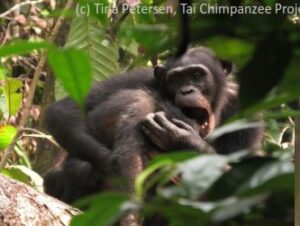

Above:(c) Tina Petersen, Tai Chimpanzee Project
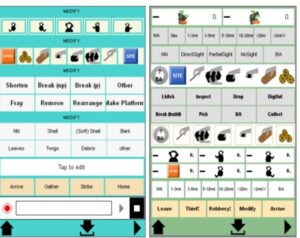
Above: Example screens of data collection tool
Giulia Benedetta Calabrese, PhD Candidate, School of Psychology and Neuroscience
I am writing this short report as part of the requirements for my St Leonard’s College Postgraduate Travel award to attend the ‘Central Nervous System Injury and Repair’ Gordon Research Conference (GRC) and Seminar (GRS) in Barga (Lucca), Italy in July 2023.
First of all, I want to express my most sincere gratitude for having made my travel possible! It was an incredible experience and I have learned a lot.
I am pursuing my PhD in a basic science laboratory whose main focus is to study the neural control of movements. Besides my great interest in the basic mechanisms of the nervous system, I also have a strong drive to study spinal cord injury. Indeed, I am very proud of the translational aspect of my project, where I am looking at the changes tat occur to the respiratory system following injuries of the spinal cord with the aim of targeting anatomical plasticity to increase functional recovery.
While I have already attended a number of international conferences during my PhD, the GRC meeting has been incredible for its strong focus on spinal cord injury research, with a particular highlight on translational studies. there was indeed a full session on Translational Research to Inform Practice (TRIP), which I found very insightful- we researchers should always keep in contact with the clinics to understand the difficulties and needs of the patients and work towards improving their life.
I really liked the diversity of topics and approaches to studying spinal cord injury, ranging from single genes that change after injury, to understanding the role of very specific neuronal subpopulations, to manipulating the system in-vitro, to electrical stimulation, gene therapy and behavioural assessments in animal models. It was also very interesting to see how the field is expanding into considering spinal cord injury a systemic disease and not only affecting neurons – there is a lot of research on the immune system! I was particularly interested in two sessions on ‘Cervical and Respiratory Plasticity’ and ‘Motor Plasticity’. I really enjoyed the talks and I learned a lot about the ongoing research that is taking place all over the world. Attending the GRC also represented a great opportunity to make myself known in the spinal cord field and to discuss my current research and future plans. I was very happy to receive positive feedback both from my talk at the GRS and my poster presentation at the GRC- people were very interested in my research, both in the tools that I am using and my findings!
To conclude, I am extremely grateful for having received the St Leonard’s College Postgraduate Travel Award that gave me the opportunity to experience all of this!


Maddie Shankle, PhD Canididate, School of Earth and Environmental Sciences
INQUA Congress XXI – July 2023 – Sapienza University, Rome, Italy
My travel to the 21st Congress of the International Union for Quaternary Research (INQUA) was made possible by the Postgraduate Travel Award funding from St Leonard’s College. At the INQUA Congress, I attended talks and posters presenting exciting new science, had valuable face-to-face meetings with international collaborators, and made new connections for potential future projects.
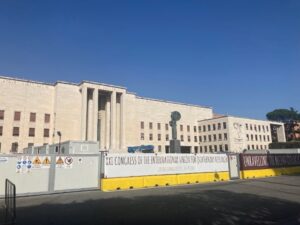
Above: Opening day of the conference at the campus of Sapienza University, Rome.
The mission of INQUA is to promote international collaboration on research concerning the Quaternary period (the most recent chapter of Earth’s history, comprising the last ~2.6 million years). Besides researchers from the fields of archaeology, geology, and palaeontology, a strong turnout of paleo-climatologists and paleoceanographers like myself also attended. I had many fruitful meetings as a result. Most notably, I had dinner with an editor I know at the journal Nature Geoscience (a very good connection to upkeep), and I had several meetings with a post-doc from the University of Cambridge who I met at a conference next year and with whom I am now planning to co-convene a session at the next European Geophysical Union (EGU) meeting! I made new connections as well, which resulted in invitations to give my INQUA talk at the British Antarctic Survey (my top-choice of institution at which to do a post-doc) and to spend a few months at the University of New South Wales, Australia, learning how to run complex Earth system models (a skill that would greatly complement the modelling proficiency I’ve developed so far).
Meeting only once every four years, INQUA also holds a special appeal that draws all the best and most-advanced science to its meetings. In the context of the ice ages (the study area of my PhD), I witnessed many new exciting fields and questions emerging from the talks I attended. For example, Daansgard-Oeschger events (events of rapid but short warming during a long-term trend of cooling during an ice age) were a hot-topic – their cause is as-of-yet unknown, but many exciting theories were proposed, with various data to back them up. There was also some healthy scientific debate, as accompanies any good conference. For instance, a major circulation in the Atlantic – the Atlantic Meridional Overturning Circulation or “AMOC” – has canonically been believed to have been weaker and much shallower during the ice ages, however for the first time at this conference I heard some scientists push back on the idea of it being weaker, citing that more definitive data is needed to conclude this. It was fascinating to be at the forefront of human knowledge in this way – to be included amongst discussions for which we still don’t know the right answer!

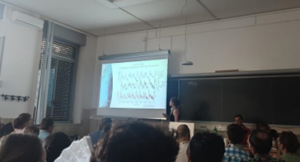
Above: Me presenting my dataset on deep Indian Ocean conditions over the Last Glacial Cycle to a very full room!
As for my own science, I presented two talks at this conference – one presenting a large dataset I have collected over my PhD that records the changing physical and chemical characteristics of the deep Indian Ocean over the last ice age, and one presenting preliminary results from a modelling study I am conducting to test a new hypothesis of ice-age Atlantic circulation. The first talk was went well and resulted in the previously mentioned invitation to give it at the British Antarctic Survey. The second talk went even better, sparking much discussion during the questions session after. I’m happy to report I found myself being easily able to defend the choices and study design I had made, and I also gathered several new ideas to pursue in future model runs, which was extremely helpful.
It was majorly advantageous getting to present both talks at INQUA as the first talk made the community aware to keep an eye out for a paper on my Indian Ocean data set I hope to publish soon, and the second talk prompted many new ideas to help round-out my modelling study. It is for reasons like these attending conferences are so helpful, especially to early-career researchers like myself, who often need such platforms from which to promote their science and introduce themselves as researchers to the wider community. As already mentioned, besides getting feedback on my science a number of fruitful connections were also made at this conference that will directly benefit my PhD and budding career, such as giving a talk at the British Antarctic Survey, convening a session at another later conference, and visiting a collaborator in Australia to learn new modelling skills. All of this wouldn’t have been possible without the Postgraduate Travel Award funding from St Leonard’s College, and for that I am extremely grateful.
Emilia Wilson, PhD Candidate, School of Philosophical, Anthropological and Film Studies
The Travel Fund awarded me £125 towards the travel and accommodation costs of attending the 2023 Annual Society for Applied Philosophy Conference in Antwerp. At the conference I presented some of my doctoral research (a paper titled ‘mis-interpretive resources’) and attended other presentations. My presentation was based on the second chapter of my thesis, which is currently a work in progress. I received helpful feedback on my work and was able to network with other researchers working in applied philosophy. I also had fruitful conversations with a journal editor who gave suggestions and advice for publishing this portion of my thesis. It was a valuable experience, and I am grateful for the financial support provided by St Leonards.
Michela Gronchi, DProf candidate, International Education Institute
The St Leonard’s travel award allowed me to attend the DProf in TESOL summer school and meet my supervisors and teachers, as well as fellow students, for the first time in person. For this experience, I am extremely grateful.
The summer school offered the opportunity to enhance my knowledge and skills in research methodology and develop my research plan accordingly. The research I am conducting for my Doctorate in TESOL is centered on assessment in English Medium Instruction, with a particular focus on implicit and explicit language learning objectives. Attending the summer school helped me better define the type of data I should be collecting and the method of analysis better suited to answer my research questions. Furthermore, experiencing on- campus seminars, lectures and workshops made me develop a sense of belonging that is often missing when distance learning.
Alongside attending the summer school, I volunteered for a pre-sessional programme in academic English for foreign students. I delivered two workshops, both online and on campus, concerning paragraph and essay structure. More specifically, the first workshop was about writing effective topic sentences; the second workshop guided the students in constructing meaningful paragraphs. Teaching at the International Education Institute was an important milestone in my career as a tutor and allowed me to experience a multicultural environment. This experience helped me reflect on how I should adapt my teaching methodology to students belonging to different cultures, especially those with limited knowledge of English.
Having the opportunity to participate in important debates in specific areas directly relevant to my research, see presentations from inspirational scholars, discuss my own work and witness my colleagues discussing theirs, and joining a team of teachers at the International Education Institute was an invaluable experience. I truly owe my many thanks to St Leonard’s College for this funding as it exposed me to such a vast range of research, allowing me to engage in interesting discussions, receive constructive feedback, and absorb as much knowledge as possible to bring back home with me to Italy.
Mara Faye Lethem, PhD Candidate, School of Modern Languages
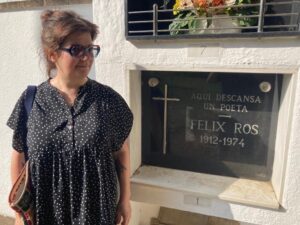
Investigating Censor Félix Ros’s papers
As a postgraduate student completing the second year of my research PhD in Catalan Studies (Modern Languages), I have been conducting archival research primarily in Barcelona and Alcalá de Henares (Madrid). My thesis is on how to translate “Catalanness” into English, particularly in the case of modern classic author Pere Calders. Following up a hypothesis about self-censorship being a marked facet of his style, I have slightly widened my scope to give me a fuller understanding of how censorship under Franco’s regime affected Catalan publishing.
Two of the censor’s reports on Pere Calders’s work that I found in Alcalá de Henares were written by Félix Ros, and displayed a high degree of familiarity. The Catalan publishing world of the 1930s was relatively small and many of the same names reappear throughout the 1940s, 1950s, 1960s and 1970s.
One of those names is Félix Ros: author of a 1939 exposé of Communist jails based on his personal experiences, literary censor specialised in Catalan-language works, translator of Catalan poetry into Spanish, looter of future Nobel laureate Juan Ramón Jiménez’s home library right after the Civil War. A convinced Fascist, he worked below Luys Santa Marina, the Head of the Falange in Catalonia, offering him all his connections in the Catalan literary scene (for example in order to get Santa Marina’s 1936 death sentence pardoned). Prior to the war, Ros had a publishing house with celebrated editor Josep Janés, which was later sold to José Manuel Lara Hernández (this was the first publishing company of what would eventually become the Planeta group, today one of the two largest Spanish groups and the largest Catalan publisher worldwide). Ros began to emerge as a minor player in a number of interesting scenarios, and a figure that could lead me to a deeper comprehension of the human politics at play in editorial censorship under Franco, particularly in the Catalan sphere.
When I found out that Félix Ros had agreed, in exchange for a pension, to donate his library to the town of Tossa de Mar (on the Gerona coast) in his will, I got in touch with the town archivist and librarian. The generous support of St Leonard’s College allowed me to travel by bus to Tossa de Mar and spend a few days there sorting through the Félix Ros papers, and visit his grave. This trip reinforced for me the importance of such visits, because beyond the contents of Ros’s library and documents held there, I was able to speak with the only surviving member of the group that went down to Madrid to retrieve those books and papers, and other local historians who gave me a much fuller picture of Félix Ros than the image I had compiled in my head based on his literary and political activities. For example, I learned more details about the circumstances surrounding his death (listed as Budapest but actually at sea on a cruise ship where he was working as a tour guide), and that he did in fact have an heir who had a hand in what remains of his legacy.
Alicia Hein, PhD Candidate, School of Divinity

European Association of Biblical Studies Annual Meeting, Syracuse, Sicily, 10-13 July 2023
As one of the recipients of the St Leonard’s College Postgraduate Travel Award, I was able to travel to Syracuse, Sicily to present a portion of my PhD research at the European Association of Biblical Studies Annual Meeting. This conference provided a wonderful experience of networking and feedback on my research, which will be of great value as I work towards submission and eventual publication.
The conference took place from 10-13 July in Syracuse, and brought together both early-career and established biblical scholars from across Europe and beyond. Not only did I have the opportunity to present a paper featuring a portion of my research on literary features within the New Testament book of Revelation, but I also was able to connect in person with numerous senior scholars whose work has been fundamental to mine. One of these is a scholar with whom I will be working closely in the future, and I was privileged to get a glimpse into some of his more recent work as well. I also had positive conversations with several publishing houses who encouraged me to submit proposals to them once my dissertation is complete.
In all, my participation in this conference was an incredibly enriching experience, both with a view towards academic career development and towards those interpersonal relationships that will continue to help me along the way. I am grateful to St Leonard’s College for helping to make this experience possible!
Ojel Rodriguez Burgos, PhD Candidate, School of International Relations

The funding provided by the St Leonard’s College Travel Award enabled me to offset some of the expenses associated with my attendance at the “British Intellectual Conservatism: Past and Present” conference, hosted at Church College. During the second day of the conference, I had the opportunity to present my paper, which focused on introducing the LSE Right, it’s connection with Thatcherism, and the political implications for the future that can be derived from their interpretation of Thatcherism. Participating in this conference not only allowed me to share my research agenda with a wider audience, but it also opened up the opportunity for my paper to be adapted into a book chapter.
Joanna Rivas, PhD Candidate, School of Medicine

Thanks to the support given to me by the St Leonard’s College travel fund, I was able to attend the Federation of European Microbiological Societies (FEMS) conference held in Hamburg, Germany from 9th to 13th of July 2023. The funding was invaluable and without it, it would have been extremely difficult for me to afford the conference fee, travel and accommodation that allowed me to attend all five days.
The conference offered me my first experience of gathering the key elements of my research and presenting/organising them on a poster. This allowed me to share the results of my studies with other researchers from the same field of study and think about how best to present them to my peers. (Even if airport security did their best to destroy it!)
Among the important topics addressed in the conference were the introduction of a new therapeutic compound currently named ADEP, that has antimicrobial properties and how it has been tested in organisms such as Mycobacterium tuberculosis. Another important topic was about how climate change exacerbates cholera cases globally and how Stenotrophomonas maltophilia engages in competitive behaviours with other bacteria during infection and in external environments.
Attending this conference gave me the opportunity to learn about the exciting studies being carried on in other research centers and universities and connect with other students working on similar projects to mine. Interacting with other attendees and inquiring about their research also gave me new ideas about possible new avenues and experiments to explore within my own project as well.
Patrick Cody Brown, PhD Candidate, School of Divinity
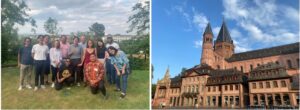
I was awarded funds to attend the Summer School hosted by the faculty of Protestant theology at Johannes Gutenberg University in Mainz.
This intensive program significantly improved my German translation skills, setting me up well to read not only Karl Barth, a significant figure in my doctoral dissertation, in the original German but also crucial secondary literature.
The program also improved my knowledge of German theology. I attended daily lectures on German theology as well as excursions exploring important German ecclesial sites. I also was able to attend research seminars in my field of study and dialogue with experienced scholars on their faculty. These gave a clearer sense of the development of the German theological tradition as well as increasing my understanding of movements that have shaped anglophone theology.
Thank you for contributing so that I could have this crucial opportunity for development.
Yang Yang, PhD Candidate, School of Biology

As a PhD student at the Scottish Ocean Institute at the University of St Andrews, I was partly funded by the St Leonard’s College travel award to attend the International Council for the Exploration of the Sea (ICES) Fisheries and Plankton Acoustics Symposium in Portland, Maine, which was taking place every 6 years.
At the symposium, I had been invited to give an oral presentation of my PhD work, titled “Modelling and in situ observation of broadband acoustic scattering from the Silver cyprinid (Rastrineobola argentea) in Lake Victoria, East Africa,” and I relished networking with leading researchers in my field. My PhD focuses on the use of broadband acoustic technology to aid in the management of fisheries in Lake Victoria, East Africa (the second largest freshwater lake), and to contribute to addressing public health issues (Schistosomiasis, the second most socioeconomically devastating parasitic disease), which is believed to be beneficial to millions of locals. During the symposium, I gained invaluable suggestions and had in-depth discussions of my work with the best scholars, which eventually made my work published in the ICES Journal of Marine Science. Thanks for the travel support from St Leonard’s College, and this is absolutely a fabulous journey for my PhD!
Muneerah Abdul Razak, PhD Candidate, School of International Relations

The School of International Relations (IR) dedicates £150 for conferences within the UK twice a year but one application can only cover one conference. As someone who is partially funded and in my write-up year, I did not have additional funds to attend the BISA conference in Glasgow as the IR Award only covers the conference registration fee for 3 days. As there were amazing speakers and panels over the three days and it was close, in Glasgow, I was adamant about being able to attend all three days. The St Leonard’s College Travel Fund offered £120 and that was enough to cover part of my travelling and accommodation costs, which was a great factor in making me attend the conference. I was able to cover accommodation for 2 nights in Glasgow and travel costs to Glasgow with the given amount by opting to take the bus, which was the cheaper option. I also managed to find another conference attendee to share a twin room with so that I did not have to fork out too much money to be able to attend a conference that was required for growth in my PhD journey.
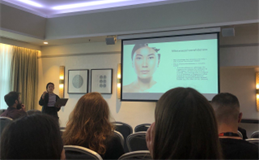
At the BISA conference, I was able to present my paper with other scholars and received the necessary feedback needed for my final chapter in my PhD thesis. The feedback I got helped me sharpen my theoretical considerations and also pay attention to certain details that I did not consider about using Singapore as a case study. This is a picture of the panel I presented my paper in.
I was also able to attend the 3-day conference and connect with key scholars in post-colonial and decolonial thought such as those based in the UK like Terri Anne Teo, Meera Sabaratnam and prof Rochana Bajpai, but also scholars who were based elsewhere such as Jayashree Vivekanandan from New Delhi, Dana El Kurd a Palestinian based in Virginia and so many more. This was the lecture given by Dr Teo during the BISA conference.
Kübra Dilekoglu, PhD Candidate, School of International Relations
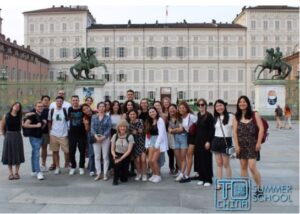
In the beginning of my motivation letter for the St Leonard’s College Postgraduate Travel Award, I have stated that participating at one of the most competitive summer schools in the field of politics, political economy and foreign policy of contemporary China will give me an
opportunity to be part of debates around China with some of the leading scholars and policymakers from around the world. The TOChina Summer School 2023, which was held in Turin and Rom for two weeks gave me this and so much more. In a time, where space for debates about China are shrinking, it is very important to keep these kinds of summer schools alive in order to connect with fellow researchers and students and increase our knowledge about Chinese politics, economy, and history. The two weeks were full of thought-provoking lectures
which were ranging from Chinese domestic politics to China’s role in the US-led order.
Moreover, I had the chance to meet students and researchers from all over the world. This is why I am grateful for receiving funding from the St Leonard’s College as this has supported me in my decision to attend the TOChina Summer School 2023.
Jessica Hogan, PhD Candidate, School of Geography and Sustainable Development
 Photos with Lorenzo Sapochetti (PhD Candidate, School of Social Anthropology)
I am grateful for the support provided by the St Leonard’s College travel award, which enabled my participation in the XIX Biennial IASC Conference titled ‘The Commons We Want: Between Historical Legacies and Future Collective Actions’ held in Nairobi, Kenya in June 2023. The funding of £125 was instrumental in covering my accommodation expenses during the conference, allowing me to fully engage and contribute to the event.
The conference proved to be an invaluable platform for knowledge exchange and collaboration with fellow researchers, particularly in the field of energy studies who are also interested in the commons. Our panel, comprised of like-minded energy researchers, facilitated
insightful discussions and a comprehensive exploration of the energy debates in the commons. The diversity of perspectives and experiences shared during the conference has undoubtedly enriched my understanding of the subject matter and broadened my academic horizons.
The financial assistance provided by the St Leonard’s College travel award not only eased the financial burden of attending the conference but also played a pivotal role in enhancing the overall quality of my experience. Engaging with experts and scholars from various backgrounds has enriched my perspective on the intricate interplay between historical legacies and future collective actions in managing the commons. As a result of my participation in the conference, I have gained a deeper insight into emerging trends and innovative approaches in the field, which directly impact my ongoing studies. The connections established and knowledge acquired have proven to be invaluable
assets in shaping my academic trajectory and fostering collaborative opportunities within the field of energy research.
I would like to express my sincere gratitude to St Leonard’s College for their generous support, which made this enriching experience possible. Enclosed are a few images capturing moments from the conference (including a visit to wind turbines just outside of Nairobi), which I believe encapsulate the spirit of intellectual exchange and camaraderie that defined the event. I understand that these images may be utilised for the College’s social media and webpages, and I am pleased to contribute to the promotion of such a vibrant academic community.
In conclusion, the St Leonard’s College travel award allowed me to actively contribute to discussions on the commons while fostering meaningful connections with fellow researchers. The impact of this experience on my studies and academic growth is immeasurable, and I am truly appreciative of the support extended by the College.
Oladele Madamidola, PhD Candidate, Schools of Geography and Modern Languages
I left the United Kingdom for Nigeria to gather data for my research work on July 8, 2023, and returned to the United Kingdom on August 4, 2023. The essence of my trip was to visit Federal University bookshops and libraries in the southwest of Nigeria (one in the north central) as well as other relevant bookshops outside the four walls of the universities to search for texts that would form my primary data. I visited the following bookshops and libraries:
- University of Ilorin bookshop and library (Kwara State)
- Obafemi Awolowo University bookshop and library (Osun State)
- University of Ibadan bookshop and library (Oyo State)
- University of Lagos bookshop and library (Lagos State)
- Booksellers’ bookshop, Ibadan (Oyo State).
At the end of my tour, I got the following eco-fiction and non-fiction texts:
- Blood Contract (2010) – Biola Olatunde
- Marooned in the Creeks (2011) – J.H.O. Olowe
- A Pelican of the Wilderness (2014) – Jacqueline U. Agweh
- A Conspiracy of Ravens (2016) – Othuke Ominiabohs
- Sweet Crude Odyssey (2016) – Lawrence Amaeshi
- We Won’t Fade into Darkness (2018) – T.J Benson (A Collection of Short Stories)
- Tomorrow Died Yesterday (2020) – Chimeka Garricks
- Twilight for a Vulture (2021) – Kyuka Lilymjok
- A Swamp Full of Dollars (2009) – Michael Peel (Non-fiction)
- Two Centuries of Oil and Gas (1860 – 2060) 2014 – Prof Olu Odeyemi (Non-fiction).
In addition, I conducted an interview with Prof Segun Adekola, a newly retired professor of Literature, on climate fiction.
In all, I am grateful to the St Leonard’s college for supporting my trip with a travel award that enabled me to afford a return-flight to and from Nigeria. The data gathered will heighten the originality of my research and enable me to contribute uniquely to the ongoing debate on African ecocriticism.
Sharon Pisani, PhD Candidate, School of Computer Science
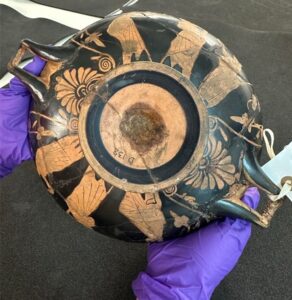
The St Leonard’s Travel Award was used to fund my travels to Glasgow for a 2-day course, titled Spring into Methods: Work with Objects. The course, which was organised by the Social Graduate School of Social Science, was held at the Kelvin Hall Teaching Labs at the University of Glasgow between 23 and 24 May. It comprised of several workshops and visits to the Hunterian Museum and the Hunterian Art
Gallery. Apart from the valuable course knowledge, this was an opportunity for networking both with other PhD students from across Scotland, as well as stakeholders and career researchers.
The first day was focused on the methodologies of working with objects. We handled objects from the university’s collection to reflect on how
material research can be conducted. This was followed with presentations from curators and other PhD students. I learnt about the processes
of object-based research. This was very informative for my studies, because as a computer science student researching Mixed Reality in heritage preservation and promotion, I had always worked more with digital reproductions. Seeing how object researchers interact with objects, and more importantly the kind of questions they asked, has been influential in helping me design more authentic digital reproductions of artefacts. The methodologies used by these researchers can be adapted to enhance my work. A methodology of particular interest was provenance research; creating an ontological itinerary or a spatial temporal timeline of the object’s journey impacts the way we think about objects and will therefore also create different digital reproductions.
The focus for the second day was specifically on decolonial object-based research. We started the day at the Hunterian Museum’s Curating Discomfort exhibition. This dovetailed impeccably with my own research trajectory, which looks specifically at leveraging digital tools to mitigate crises in cultural landscapes due to climate change, language decline, and migration. I also took part in discussions about how people in the academic and heritage sectors can work with the community to create successful impact projects. Seeing how the research and thoughts were put into practice in the Curating Discomfort exhibition, inspired discussions, and thoughts about how I could create digital
exhibits that uncover colonial implications and give the community a voice. During the final workshop, I contributed my digital skills knowledge in scenarios where we performed decolonial interventions on certain objects.
Looking ahead, I envisage that I will be thinking more deeply about the origins of the digitally reconstructed objects in my own interventions. My biggest takeaway was the role of provenance methodology in bringing to light the more untold history of heritage. I have made valuable connections with other heritage researchers that are also interested in digital tools, as well as digital heritage professionals from the University of Glasgow. In summary, the St Leonard’s Travel Award was influential in weaving together object-based methodologies with my own digital technology research. Through interactions and reflections, I feel more equipped to navigate my interdisciplinary research into digital heritage preservation and innovation.
Tiancheng Yu, PhD Candidate, School of International Relations
Thanks to the travel award from St Leonard’s College, this conference in Cambridge became my first academic conference in the UK, and all parts of it were so fantastic and memorable! The conference themed on nature in political thought was divided into four panels; I spoke on the topic of Malebranche’s positive nature and political metaphors; after that I answered the audience’s questions. The event ended with a keynote lecture on personality and we were treated to dinner at a Jordanian restaurant by the organizers.
I believe comparative and synchronic research are essential to my study of political theory, and participating in academic discussions, presenting one’s own works to peers, and responding to criticism are the main methods of the study. As the only presenter from St Andrews, I believe my participation has demonstrated our concern and interest in the relevant fields. Many thanks to the College and the travel award that made my Cambridge visit a success!
David Harmon, PhD Candidate, School of Physics
The St Leonard’s College Travel Award enabled me to travel to the Netherlands, where I attended the Collegium Spinozanum IV, a four-day conference on the philosophy of Spinoza at the University of Groningen. My research project at the University of St Andrews is dedicated to studying the relationship between physics and metaphysics in Spinoza’s philosophy and in the related philosophies of other early modern thinkers, so attending this conference was a high priority for me, both personally and academically. While there, I was able to meet many leading scholars in Spinoza studies, as there were roughly 40 unique speakers at the conference – not to mention the great number of scholars who attended as audience members. As one of the speakers, I was able to present some of the recent work that has gone into my dissertation. The feedback I received from this presentation of my work was encouraging and extremely helpful. I expect that this feedback will have a significant impact on my research, as it has already urged and empowered me to make some significant changes to the paper for purposes of attempting to publish. Additionally, at the conference I was able to have several one-on-one conversations with a few of the most influential Spinoza scholars working today. Though only some of these conversations focused on my current research, several of the topics we discussed led to some new ideas which could be the starting points for future projects, including possible post-doc proposals or publication efforts. This conference has additionally served as a stellar networking opportunity, as I am now in contact with a handful of scholars who attended the event, some of whom have shared current research work with me already and some others of whom have commented on my own works-in-progress as well.
After the conference concluded, I was able to use the funds from the Travel Award to partially support a Spinoza-focused tour of Amsterdam, the Hague, and Rjinsburg. During the five days I spent in these cities, I visited many important sites related to Spinoza’s life, including his home in Rjinsburg (where he lived 1661-1663), his home in the Hague (where he passed away after living there 1670-1677), the synagogue complex in Amsterdam from which he was excommunicated (in 1656), and the church where he was buried (and likely still is buried, though his body was exhumed and moved during a renovation). My research is a combination of both philosophy and intellectual history, so this trip helped me to fulfil one of the requirements for success in such a project: it is absolutely vital to my research that I come to a better understanding of the world in which Spinoza lived. Since my project is about Spinoza’s intellectual development, specifically with regard to physics and metaphysics, it is extremely important for me to grasp the intellectual environment in which he worked. Seeing these things with my own eyes is illuminating and has given me insight that will (and already has) improved my approach to my research project. And this is to say nothing of the personal edification that resulted from having the opportunity to be so close to Spinoza’s world. On the following pages, I have included some relevant pictures from my visit – respectively, (i) me in Spinoza’s Rjinsburg home, (ii) me in front of the statue of Spinoza in the Hague, (iii) me at Spinoza’s gravesite monument, and (iv) me presenting my paper at the University of Groningen.
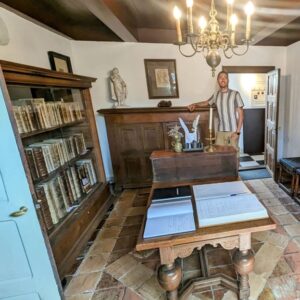


Many thanks are due to St Leonard’s College for providing funds that made this a possibility. Not only did the Travel Grant enable me to present my own work amongst some of the best scholars in Spinoza studies, but it gave me the opportunity to improve my own methods and understanding, both by speaking to other scholars and by appreciating (in a more direct way) the life of Spinoza and his contemporaries.
Qilin Shangguan, PhD Candidate, School of Biology
St Leonards College Travel award helps me attend the CRISPR Conference 2023, one of the best conferences for me to learn leading research information and advanced science ideas. It gathered CRISPR researchers from around the world. I was able to talk with both research peers and PIs. At this point, I’m finishing my PhD. The conference provided me with information on CRISPR development and potential job opportunities. After meeting researchers in this field, I successfully built a connection with the CRISPR community and introduced myself to it. It’s the best conference for my PhD and career.
I got the chance to talk with researchers in the CRISPR community. I actually got some offers to do postdoctoral research. Besides, I’ve gained an idea of the current CRISPR research and the direction of development. I decided to continue scientific research after my PhD. Via the conference, I obtained offers of being a postdoctoral researcher. I will work on my interest in CRISPR, and my future career is shaped by the conference.
Euan McArthur, PhD Candidate, School of History
The award from St Leonard’s facilitated trips to several archives and libraries. In London, I was able to visit the British Library and National Archives, and in Cambridge the Cambridge University Library. Both the British Library and National Archives delivered up a wealth of government reports, providing context for a chapter which I have drafted on the Isle of Man’s place within the growing British empire, as well as historical analyses of the island’s situation which directly contributed to the historiographical and political debates to explore. These primarily concerned the mid-eighteenth century, at which time a well of correspondence and records from the Treasury survive.
The Cambridge University Library provided access to the records of Prime Minister Robert Walpole. This allowed insights into an earlier period of Manx constitutional history, the 1720s and 1730s, with official reports again providing documentary and analytical evidence, including from one figure, George Waldron, whose 1726 history of the island is one of my main objects of analysis. Finally, in Oxford I was able to visit the Bodleian Library, which shed lights on aspects of Manx political history across the period of my research (roughly, 1648 to 1776).
In addition to informing my thesis, several documents have also been able to inform academic side projects. These are mainly prospective essays for publication, one of which, ‘Thomas Denton’s Perambulation: Two Counties, Three Kingdoms, and Four Nations History?’ has since been published in the peer-reviewed Northern History journal (see here); this references material from the Bodleian Library and National Archives. Although my project is concerned with Manx historiography, I also hope to write at length about the eighteenth-century politics of the island in relation to Britain, and have accrued a wealth of material on this visit.
Below are two sources; correspondence between Treasury officials around the time of the 1765 Isle of Man Purchase Act, and an eighteenth-century drawing of the island, highlighting changing illustrations of the island from British observers.
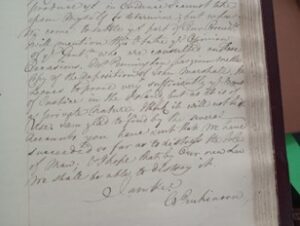

First: British Library, Add MS 38304, f.101. Charles Jenkinson (Secretary to the Treasury) to Charles Lutwidge (Customs Surveyor for the north-west of England).
Second: British Library, Add MS 2736. Anonymous sketches of the Isle of Man.
Tori Champion, PhD Candidate, School of History
In June 2023, I was awarded nancial assistance from St Leonard’s Postgraduate College to undertake collections-based research in London art museums. My PhD thesis project deals with the life and work of eighteenth-century French artist-naturalist Marie-Thérèse Reboul Vien, and my broader research interests include the art of France and Great Britain in the seventeenth and eighteenth centuries, and her primary interests include women as artists and subjects, gendered iconography, and the global reach and implications of natural history illustration. Throughout the summer and this coming autumn, I am working on a short article on a manual for miniature painting rst published in 1686 by the artist Catherine Perrot. Perrot was a member of France’s Royal Academy and taught painting to young members of the royal family in seventeenth-century France, but no work by her has survived that could as yet be condently attributed to her. To contribute to my understanding of what her work would have been like, and thus to strengthen my study of her published manual, I sought out works in UK
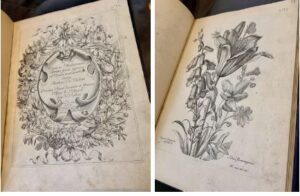
collections by her teacher and mentor, the royally-appointed ower painter Nicolas Robert. It was for this purpose that I examined prints and paintings by Robert in the collections of the Victoria and Albert Museum and the British Museum in London. In the end, I made a major discovery for my eld. Perrot based her manual on two volumes of prints published by Robert, but the exact details of these volumes had been hitherto unknown. On my museum visits, I discovered the identities of these two volumes, one of which is held by the V&A. The title page of said volume, along with one of the illustrations contained therein, can be seen below. I now hope to further the impact of this work by
seeking to re-attribute anonymous or incorrectly attributed works to Perrot.
Wytse Willheim, MSc Student Evolutionary, Comparative and Developmental Psychology: Origins of Mind, School of Psychology and Neuroscience
For my MSc final project I studied buttress drumming in chimpanzees. Buttresses are tree roots that protrude from the trunk to form a sort of planks, seen a lot in tropical rainforests. Chimpanzees drum on these roots to show off their strength, and also to communicate with other chimpanzees far away in the forest. The drum sounds can travel over distances of at least 1 km! I specifically wanted to investigate the factors influencing buttress and tree selection, so whether chimpanzees took into account for example tree species or buttress size when choosing a buttress to drum on. However, to get this data I needed to do fieldwork, researching wild chimpanzees. The location my supervisor (Dr. Cat Hobaiter) and I decided on was Budongo Forest Reserve in Uganda. Budongo lies in the North-West of Uganda, near Lake Albert, and observational research on chimpanzees has been carried out in this forest since the 90s.
However, to do this research I needed to provide my own funding. I applied to several grants, of which the St Leonard’s Travel Award is the only one I received. I used the money mostly to pay for supplies for the field, and also to pay for my food while I was at the field site. Researchers at the site do not have to cook themselves, but did have to pay a weekly fee for groceries. Having the Travel Award meant I did not have to worry about how to pay for this.
My time in the field was incredibly valuable to me. Firstly, it has provided me with essential field experience, which will make it easier for me to get jobs involving fieldwork in the future, which I am very eager to do. Secondly, during my time in Uganda I got to experience a culture entirely different from that of the Western countries I have lived in so far. I think this will encourage me to be more open-minded in the future. Fieldwork was challenging but very gratifying. I got to challenge myself in a variety of ways, both physically and mentally. I have become more confident in my ability to do research, and in my ability to adapt to new challenges. Even if I never do fieldwork again, I believe this experience will still have been a great benefit to my personal development. I am very grateful to St Leonard’s College for providing me with funding to take this opportunity.
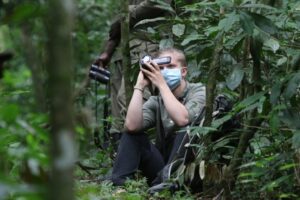 (Photo by C.Hobaiter)
Mohsen Ghaffarikahyaei, MLitt International Master in Audiovisual and Cinema Studies, Department of Film Studies
I am immensely grateful to have been selected as a recipient of the St. Leonard’s College Travel Award, which provided me with the opportunity to attend the NECS (European Network for Cinema and Media Studies) conference held in Oslo, Norway. This award has significantly impacted my academic journey, broadening my horizons and enhancing my understanding of current research trends and
methodologies.
I would like to express my sincere gratitude to St. Leonard’s College for their generous support, without which attending this conference would not have been possible. The financial assistance covered a significant portion of my travel expenses, particularly my flight and bus tickets, alleviating the financial burden associated with international travel.
The NECS conference in Oslo was a remarkable experience that allowed me to engage deeply with a diverse range of conferences and academic researchers. The chance to immerse myself in discussions, presentations, and workshops on various topics has enriched my perspective on academic discourse and research practices. The event’s environment was particularly stimulating, given its prestigious
setting at Oslo University.
At the conference, I found myself drawn to discussions around the themes of care and sustainability in contemporary research. These themes resonated with my academic interests and future aspirations. As I embark on my master’s thesis, which focuses on the historical impact of oil industry in the Middle East, particularly in Iran, I was inspired to approach my research with a heightened awareness of the ethical and sustainable dimensions. The issue of care, both for the environment and the communities affected, has taken on newfound significance in light of the insights I gained from the NECS conference.
Beyond the academic content, attending the conference provided me with the chance to explore the rich cultural landscape of Oslo. I took advantage of the opportunity to visit museums and partake in cultural events, which not only added depth to my experience but also highlighted the importance of cultural context in research endeavors.
The St. Leonard’s College Travel Award has been instrumental in shaping my academic trajectory. The insights gained from the NECS conference have fortified my commitment to research excellence and social responsibility. I am now better equipped to delve into my master’s thesis on the historical impact of oil industry in the Middle East, infusing my research with a deeper consideration for the well-being
of the environment and affected communities.
In conclusion, I extend my heartfelt gratitude to St. Leonard’s College for granting me this travel award. The opportunity to attend the NECS conference in Oslo has been a transformative experience, inspiring me to pursue my academic goals with a renewed sense of purpose and a profound understanding of the intersection between research, care, and sustainability. Thank you for making this happen.
Enrico Galvagni, PhD Candidate, School of Philosophical, Anthropological and Film Studies
I am pleased to present this report detailing my recent academic journey to New York, which was made possible through the generous scholarship awarded to partially cover the expenses of my trip with a contribution of £ 125. The purpose of this trip was (1) to present a paper at New York University (NYU); (2) attend a conference in honour of Professor Don Garrett (NYU); (3) have an individual supervision
with Prog. Garrett. This report provides an overview of the events, experiences, and the valuable networking opportunities that I was fortunate to be a part of during my time in New York from 19th May 2023 to 27th May 2023.
• NYU Paper Presentation
The focal point of my trip was the presentation of my paper at NYU. The paper, titled Hume and
Hutcheson on the nature of Morality, was well-received by the NYU History of Philosophy work-in progress research group.
This experience was not only intellectually stimulating but also helped me refine my research ideas and further develop my academic prowess. In addition, the NYU presentation provided a platform to showcase my research work, exchange ideas with fellow scholars and strengthen my professional network.
• Don Garrett Conference
Attending the conference dedicated to Professor Don Garrett was a remarkable experience. It was aprivilege to be part of an event celebrating Prof. Garrett’s influential contributions to Hume scholarshipand to interact with many excellent famous scholars. Participating in the conference broadened my horizons and deepened my understanding of philosophical discourse in the early modern philosophy
community.
• Networking and Collaborative Opportunities
The trip to New York proved to be immensely beneficial for networking and forming meaningful academic connections. My interactions with Professor Don Garrett have been particularly valuable. His support and mentorship have been instrumental, especially as I navigate the current academic job application process. I am honoured to have secured his endorsement for my job applications through his willingness to write recommendation letters on my behalf.
Conclusion
In conclusion, my trip to New York was an enriching and transformative experience. I am grateful to St Leonard’s College for the support that enabled me to go on this trip and to strengthen both my academic skills and my job market profile.
Edward Armstrong, PhD Candidate, School of Classics
In July 2023, I presented a paper at the Celtic Classics Conference (CCC) at the University of Coimbra, Portugal, on the history of rhetorical education in Classical Athens and its relationship with historiography. The St Leonards College Travel Award enabled me to travel to Coimbra and stay for the duration of the conference (4 days) in order to present my research paper, participate in cutting-edge discussions on the panel topic – rhetors and historians – and the future of the discipline. It also facilitated important networking with international and cross-disciplinary scholars, which has already led to me being invited to a conference in the Middle East in 2024. An important dimension of the CCC is that it expressly aims to facilitate the publication of scholarly work arising from the conference. The panel organisers have stated that they intend to pursue this course of action and include as many papers from our panel as possible through a peer-reviewed publication process in 2024. I would like to thank St Leonards College, St Andrews, for the Travel Award that reduced the personal expense of this trip and, therefore, enabled me to gain the benefits of this formative experience.
Lucy Turton, PhD Candidate, School of English
The grant provided by St Leonard’s College enabled me to travel to Limerick for the 2023 Early Book Society Conference, a prestigious biannual conference that focuses on codicological, historical, literary, and palaeographical research on medieval and Early Modern books and book history.
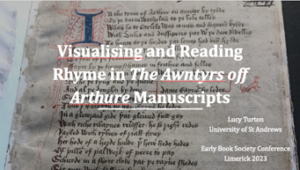
At this year’s conference, I presented a paper entitled ‘Visualising and Reading Rhymes in The Awntyrs off Arthure manuscripts’, which focused on the mise-en-page of verse, a key interest of mine that I have pursued throughout my postgraduate research. The opportunity to receive encouragement for my work from the most learned and renowned international specialists, as well as being able to discuss book history over coffee and drinks with such famous academics.
One particular delight of the conference was the keynote address by Professor Lisa Fagin-Davis about the infamous Voynich Manuscript, held at Yale University’s Beneicke Library. As the foremost researcher on perhaps the best-known and most puzzling manuscript in the world, her insights and humorous anecdotes were a unique treat.
I am deeply grateful to St Leonard’s College for assisting my wonderful social and intellectual experience and helping me to develop my academic networks at this specialist conference. Without the assistance of the travel fund, it would have been very difficult to afford to make the journey over to Ireland and enjoy all the inspiring and stimulating discussions that the Early Book Society enabled.
Areej Al Khathlan, PhD Candidate, School of International Relations
I am writing to provide an overview of how the funding I received has facilitated my travel opportunities and influenced my academic pursuits. Although I was
The funding received was primarily utilized for travel-related expenses, including transportation, accommodation, and relevant study materials. While I had initially anticipated the travel award to be approximately £700, I fully understand the heightened competitiveness of this year’s selection process owing to the substantial influx of applicants. I am pleased to report that this financial aid has still had a significant positive impact on my studies and personal growth.
The funding allowed me to participate in an academic conference which is very helpful to my research. This event provided me with the chance to interact with experts in my field, share my research, and gain valuable insights into the latest developments. Notably, I was able to attend the conference in Terrorism Research in a polarized world in Lisbon in Portugal where I presented my research paper about rehabilitating Violent Extremists. This experience not only expanded my academic network but also boosted my confidence in presenting my ideas to a larger audience.
The exposure gained through these travel opportunities has directly translated into improved academic performance. The knowledge and perspectives gained from attending these events have enriched my understanding of my field and inspired new avenues of exploration for my studies. Additionally, networking with fellow researchers has led to collaborative projects and discussions that have contributed to the depth and breadth of my academic pursuits.
Sarah Edgcumbe, PhD Candidate, School of International Relations
In October 2022, St Leonards College granted me a travel and research award to contribute towards translation fees during my research in Iraqi Kurdistan. This research took place in February and March 2023. This funding from St Leonards College was crucial for me to able to conduct semi-ethnographic field work with Kurdish Hosta (a sub-clan of Kurdish Gypsies).
My doctoral research explores Gypsy, Roma, and Traveller conceptualisations of peace, and the implications for peacebuilding of GRT erasure from conflict analysis. Due to the political situation in Iraqi Kurdistan, during formal and focus groups and interviews, Hosta were initially often reluctant to express their opinions openly. It is through observation combined with focus groups and interviews that I was able to gain an understanding of Hosta perspectives on identity, conflict, peace, and social cohesion, including, most notably, the pernicious effects of the structural violence they experience in everyday life.
Kurdish Hosta are one of the most stigmatised, and marginalised groups of people in Iraqi Kurdistan. Unlike other minorities, Gypsies have no political representation in the Kurdistan Parliament, and they are frequently discriminated against in terms of employment, access to education, and within the social sphere. This funding enabled me to take the time necessary to build relationships within the Hosta community based on trust, in partnership with a Kurdish translator who was able to translate informal conversations and interactions. Without data gathered through observation, I undoubtedly would have been able to gain only a superficial understanding of Hosta experiences, priorities, and perspectives.
Rizgari village: Research site in Iraqi Kurdistan

I would like to take this opportunity to express my gratitude to St Leonards College for provision of this funding. Not only did it contribute significantly to the rich data that I was able to obtain from the Hosta community with the assistance of a translator, but it has helped me to develop ongoing relationships with members of the Hosta community through which we advocate together to secure political support and funding for the Hosta community in the future.
Asqa Ashraf, MLitt Art History, School of Art History
On 19th May 2023, I received the St Leonards College Travel fund, which amounted to a total of GBP 125. I had requested this grant to be able to fund a research trip to Paris between 18th June to 6th July 2023. While the amount was insufficient to cover the cost of my trip to Paris in its entirety, I was able to partially fund my standard return tickets, which cost GBP 149, between London and Paris for the trip. To cover the cost of my accommodation in Paris, I was able to procure funding from the School of Art History.
Through the travel fund, I was able to attend lectures at the Ecole du Louvre that were relevant for my MLitt dissertation’s research and visit the recent exhibition on “Photographs: An Early Album of the World” at the musée du quai Branly, which I reviewed for my dissertation. As mentioned in my project outline, my MLitt dissertation examined photographs from nineteenth century India. I was comparing photographs taken by Darogah Abbas Ali and Felice Beato after the Revolt of 1857 and examining the contemporary display and digitization of their photographs. Visiting the quai Branly, exhibition, therefore was very important because they had photographs that Beato took during the Opium War on display. One of these photographs was of human remains following the violence at Taku Fort, which was similar in composition to Beato’s photograph of the Secunderabagh in Lucknow, which I looked at in the third chapter of my dissertation. The photograph of the Secunderabagh was staged months after the massacre, and it is likely that the photograph of the violence at Taku Fort after its capture was staged as well. The quai Branly exhibition was therefore used as a case study to examine the ethics of displaying violent colonial photography. The photograph of the Taku Fort on display at the quai Branly, for example, was not accompanied by a caption detailing the circumstances in which the photograph was taken, although the exhibition tried to take on a progressive approach towards nineteenth century photography by arguing that the violent photographs displayed in the exhibition were meant to raise questions, and not presented as trophies.
This helped me argue that the geographic politics of display and the intended audience matters, that it places the postcolonial citizen in a liminal space where they are on one hand, able to reclaim violent colonial photography as their display acts as evidence of physical and epistemic violence on colonised bodies, and on the other hand, the postcolonial citizen is subjected to a neo-colonial gaze and epistemic violence as the digitization and display of violent colonial photographs is accompanied by decontextualization of the photograph. The issue of epistemic violence in colonial photography, and its postcolonial consequences is a topic I would like to explore further through a PhD. Developing this interest would not have been possible without the travel award.
 Beato’s photographs from the Opium War, photograph or the Taku Fort on the right, lacking a caption below detailing how the photograph was taken.
 Photographs: An Early Album of the World
 Caption arguing that the photographs on display are not presented as trophies , but are meant to raise questions.
Yan Ying Yap, MLitt Museum and Heritage Studies, Graduate School for Interdisciplinary Studies
The funds from the St Leonard Travel Award was used to pay for my transportation to Paris in order to complete a summer study exchange at the École du Louvre as part of my dissertation project. Whenever we were not studying about French museology, exhibition design or preventive conservation (which was only some of the many we had), we were visiting museums on private guided tours that École du Louvre had prepared for us. These tour visits included the Palace of Versailles and Louvre, which took place on their closing days. It had been an incredibly insightful experience to learn about the uniquely diverse history of each museum we visited, and how different French museological policies, standards, and practices varied in comparison to the ones in the U.K. During my free time, I visited immersive digital exhibitions that were taking place in Paris during my exchange to interview curators for my dissertation project. Eventually, I selected Musée du Quai Branly – Jacques Chirac’s Songlines: Tracking the Seven Sisters to be my case study’s main exhibition, and interviewed the curator for my project.
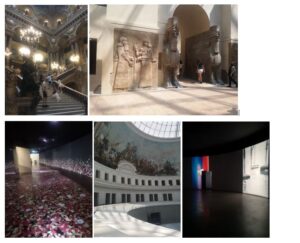 Top (left to right): Opera Garnier and the Louvre
Bottom (left to right): Musee du Quai Branly – Jacques Chriac’s Songlines: Tacking the Seven Sisters and Bourse de Commerce’s Pinault Collection
Anne Daffertshofer, PhD Candidate, School of Art History
My doctoral research exposes the notion of Anthropocene mobilities to address the intersection of environmental crises, travel and mobility in contemporary art, with a particular focus on artists born after 1979. By applying an ecocritical approach to its analysis, it follows the trajectories of environmental humanities and ecocriticism and integrates them into historical research and analysis. Over the past two and a half years, I have been working closely on issues related to anthropogenic climate change and travel.
In order to maintain the integrity of my research, I decided to early on to avoid carbon-intensive travel wherever possible. However, as a contemporary art researcher, it is important to be able to engage in person with a wide range of artworks that may be relevant to my research. And being based in Fife, I do not have regular access to such exhibitions. Reading Post-Growth Living by British philosopher Kate Soper at the beginning of my PhD journey gave me the inspiration I needed: instead of taking several short trips, Soper argues for taking longer but fewer trips, which allow one to use more sustainable modes of transport while increasing both efficiency and value. In other words, rather than denying the reality that travel cannot always be avoided all together, Soper reminds us to make conscious choices and reduce where possible.
With this in mind, I planned a two- month research trip to continental Europe, using an Interrail ticket to visit relevant exhibitions by train. However, longer journeys tend to be more expensive, as a result of which this option may be inaccessible to many researchers without additional financial support in the form of travel grants. This is why I am so grateful for the generosity of the St Leonard’s College Travel Fund which covered my accommodation and subsistence in Copenhagen. The exhibition I visited was entitled ‘yes, it moves’ and was perhaps the most impactfully curated exhibition I have seen so far as part of my PhD, as it related directly to the issues and questions, I have been exploring over the past two years. It gave me a lot to think about and I was also able to make contact with the curator. In short, this trip proved to be very important for me in terms of my research and networking and I would have not been able to visit Copenhagen without the support of the St Leonard’s Travel Fund.
Thank you ever so much!
Alex Houston, PhD Candidate, School of Geography and Sustainable Development
I received funding from the St Leonard’s College Postgraduate Travel Award to attend the conference: “Association for the Sciences of Limnology and Oceanography Aquatic Sciences Meeting”. This meeting is held every two years, this year it was in Palma de Mallorca, Spain, and facilitates the sharing of world-leading research in aquatic sciences, with a focus on ecosystem resilience and recovery. I presented my PhD research which aims to understand how saltmarshes, which are vegetated coastal ecosystems, function as carbon sinks by drawing down large amounts of greenhouse gases from the atmosphere and storing them for up to millennia. The carbon stored is often termed ‘blue carbon’, and restoration and protection of saltmarshes may provide a pathway towards net-zero emissions and mitigate the effects of climate change.
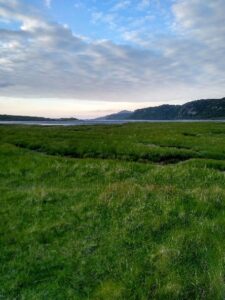 Kyle of Tongue saltmarsh, Scotland
As well as presenting my research, I attended many presentations and met fellow researchers to learn about and discuss research problems and potential future areas of work for during and beyond my PhD. This improved my understanding of which knowledge and evidence gaps to target to generate impactful research outputs. This conference allowed me to further my research connections and access a wide range of experts to help develop my work.
Aside from the many academic benefits of the conference I enjoyed my daily bicycle commute along the waterfront, during which I reflected on the need for systemic changes for meaningful emissions reductions, but the shared importance of individual actions such as changes to our mode of commute, where possible. This contrasted with my choice to fly to a conference. Sharing research across the scientific community is essential for driving academic excellence, and in-person conferences remain a fantastic outlet for this, but often necessitate flying. Where high-emissions travel is unavoidable, regulated emissions offsetting schemes can be a great way to reduce environmental impacts. I hope that one day I will be able to offset my travel emissions by buying carbon credits generated from the protection/restoration of a saltmarsh
 Palma Bay, Mallorca
Hannah Wyles, PhD Candidate, School of Biology
St Leonard’s College Postgraduate Travel Award covered some of the costs of my flights to the Movement Ecology of Animals Gordon Research Conference in Italy, May 2023. During this conference I presented my research entitled: “A novel approach to using seabed geomorphology as a predictor of habitat use in highly mobile marine predators: implications for ecology and conservation” which was published in Frontiers in Marine Science in 2022. This research represented an important addition to the body of work in understanding drivers of grey seal movements around the UK and contributes to the broader ecology of marine predator movements. The conference allowed me to share my findings from this research with conference attendees through a poster presentation and helped benefit my personal researcher development through networking with other scientists. I was also able to attend many interesting talks and discussions around animal movement ecology which will be valuable in my continuing PhD research. I am grateful to the St Leonard’s college for providing travel support, helping me to participate in this conference.
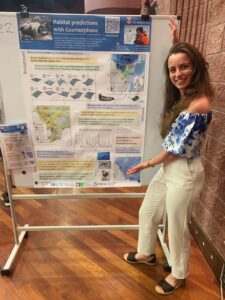
Georg Kodl, PhD Candidate, School of Geography and Sustainable Development
With the help of the St Leonard’s College travel award, I had the privilege of showcasing my research at the renowned EGU conference held in Vienna at the end of April this year. This distinguished gathering stands as the preeminent event in the realm of earth and environmental sciences across Europe.
At this assembly, I had the opportunity to present my research on “soil erosion trends can be obscured in remote sensing data in Arctic tundra monitoring”. This theme addresses the important question of how we can effectively monitor the Arctic landscape, a topic of great importance given its rapid change in the wake of climate change. The enthusiastic reception and engagement that my research generated was extremely gratifying and confirmed the relevance and pertinence of my work.
It was a captivating space to partake in a wide range of sessions spanning diverse disciplines such as soil sciences, ecology, geomorphology, and remote sensing. This breadth of insights facilitated thought-provoking discussions. It was a helpful milieu to get inspiration and opened new avenues for my upcoming research endeavours. A distinct highlight was the presence of authors from the IPCC report and committed climate science activists, who spoke passionately about the pivotal role of science in informing stakeholders and the public about the pressing climate crisis. These conversations resonated deeply, underscoring the dual imperatives of rigorous, unbiased research and advocacy for urgent action by policymakers.
Overall, it was an exciting week with many outstanding speakers and encounters. Contributing and participating in such a gathering of world-leading scientists was very inspiring, as I could learn about current cutting-edge environmental research in different fields, but also learn about the importance of a scientist’s responsibility.

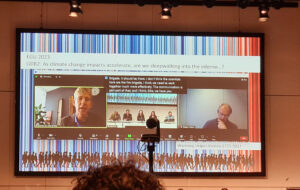

Melissa J. Barciela Mandala, PhD Candidate, School of Divinity
From 13 November to the 23 November, 2022, I attended three major conferences in my field in Denver, Colorado, U.S.A. These are annual conferences for three major societies in biblical and theological studies: Evangelical Theological Society (ETS), Institute for Biblical Research (IBR), Society for Biblical Literature (SBL). These professional societies host consecutive conferences consisting of plenary presentations, auxiliary events, research papers, and networking opportunities. The St Leonard’s College travel grant helped make this trip to Denver possible. At ETS, I presented two papers based on my research. One paper entitled “Reimagining Grief: A Comparative Analysis of Grief and Its Social Function in Paul and Epictetus” was presented in the Pauline Epistles section. The second was an invited paper for the Hispanic/Latinx Scholars Reflection Group session based in my doctoral research and entitled “Who Are We? Virtue, Identity, and Suffering in Philippians.” At IBR, I hosted a large event for postgraduate students. It was attended by about 50 people. I sit as chair of IBR Students, an international initiative to encourage and equip students in biblical academics. At SBL, I also presented my paper “Reimagining Grief: A Comparative Analysis of Grief and Its Social Function in Paul and Epictetus” in the Comparative Methodology in Biblical Studies session. These were excellent opportunities to connect with scholars in my area of interest and present my research as a doctoral student of the University of St Andrews.
In addition, these were unique and fruitful opportunities for professional development. During these three conferences, I met with a number of scholars, spoke with a publisher about co-authoring a book (which is now in the proposal phase as a result!), and I met with a publisher interested in potentially publishing my dissertation once complete. I also attended a Board meeting as the co-director of Logia St Andrews, an initiative to support women in biblical and theological academia. This trip has also led to a potential co-authored book contract with a major publisher and an invitation to contribute to an edited volume on comparative methodology in biblical studies.
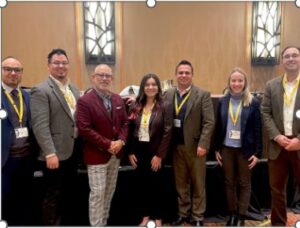 The Hispanic/Latinx Scholars Reflection Group at ETS; I am the second from the right.
Dr Isaac Portilla, St Leonard’s Associate, School of Divinity
The Rome Summer Seminars on Religion and Global Politics (4-17 June 2023) is an intense and carefully crafted journey that captures the vitality and power of the city of Rome as a global center to explore and understand a difficult yet unavoidable relationship—religion and politics.
The Seminars allowed me to make important institutional contacts related to my present research project on interfaith dialogue, mystical consciousness, and Hindu-Christian relations. I also obtained valuable feedback from the participants and got acquainted with key factors and players that will help me to bring this project to practice-oriented settings.
The Seminars are designed to broaden the perspective and interdisciplinary literacy of the participants, helping them to think beyond field/area-specific issues and methods to address more effectively current global realities and dynamics. I especially enjoyed the flow of the institutional visits, often juxtaposing conflicting views as they play in real life (e.g., nation states’ interests and concerns vis-à-vis religious actors’ values and actions).
Throughout the Seminars, I made international scholarly contacts; I also got to understand better the potential role of academia in public affairs, which is relevant to my career and personal orientation as a world citizen.
It was a privilege and a pleasure to participate in the Seminars. The human quality and companionship of the participants and organizers was excellent.
I am grateful for the travel award provided by St Leonard’s College.
Maeva Terrapon, PhD Candidate, School of Biology
“Lifetime migratory behaviour of tropical killer whales (Orcinus orca) from stable isotopes in their tooth growth layers”
My PhD project focuses on investigating the ecology of killer whales found in the tropics – including their diet, movements, and distribution. Due to the lack of regular sightings, tropical populations of killer whales are challenging to study. However, conducting analyses on their diet and large-scale movements is possible using teeth from stranded individuals, which provides a solution to address important ecological questions. Indeed, each killer whale tooth grows in layers, slowly filling in the tooth cavity and allowing us to use these layers as a proxi for the animal’s age, similarly to the growth layers of a tree. Each layer represents a year in the life of the animal, and material (dentine) from a given layer can be obtained and analysed to investigate the diet and movements of this individual at a given time using stable isotope analyses.
I started my laboratory work for this project at the Stable Isotope Ecology lab at SUERC (Scottish Universities Environmental Research Centre) in Glasgow in February 2024. This work is funded by a NERC National Environmental Isotope Facility grant, which covers all training, bench costs, and analyses. However, no funding was available for travel expenses from St Andrews to Glasgow for this project. The St Leonard Postgraduate Travel Award helped me fund some of these expenses, including some of the accommodation costs while I stayed in a shared flat. This
funding allowed me to focus my energy and time on research rather than on long dailycommutes.
In addition to learning new skills and advancing my research, my time at SUERC has brought new collaborations, ideas, opportunities and friends. I would like to thank the St Leonard College for this support which will benefit my PhD project and research career into the future.

Michael Logue, PhD Candidate, School of Physics and Astronomy
I am a first year PhD student in the School of Physics and Astronomy, studying radio telescope observations of massive star-forming regions. This year I was given the opportunity to travel to the United States for the first time, to attend a National Radio Astronomy Observatory (NRAO) imaging workshop in Charlottesville, Virginia. My supervisor and I wished to extend this trip so I could travel to the University of Florida in Gainesville, Florida after the workshop, to meet with a collaborator of ours and learn data analysis techniques essential for the next stages of my research. This would also save the financial and environmental impact of another transatlantic flight later in my PhD. This extension would require additional funding for accommodation and subsistence, so I was very excited when the St Leonards Postgraduate Travel Award was announced in April 2023. The application itself was simple, requiring an outline of the proposed research project, a budget breakdown and an academic reference. I was delighted to be informed of my success in May 2023 and thus confirmed my accommodation and flight bookings for both Virginia and Florida.
On 12th June I made the long journey from Scotland to the United States- first to Charlottesville where I stayed for the NRAO workshop. I attended several informative lectures throughout the week and had plenty of free time in the evenings and at the weekend to explore Charlottesville with the other attendees, who were all incredibly friendly and helpful. This culminated in the NRAO-organised trip to Green Bank Observatory in West Virginia, where we visited the Byrd Green Bank Telescope- the largest fully-steerable radio telescope in the world. As a radio astronomer this was a truly surreal and impressive experience which I will cherish for many years to come.
I have now begun to directly apply the techniques I learned at the workshop in my own research, making my own images of massive star-forming regions.
After Charlottesville, I travelled to Gainesville on June 22nd to begin a week of work with my collaborator at the University of Florida’s Bryant Space Science Center. Gainesville was a picturesque town, especially in such beautiful (and very hot and humid) weather. All members of the astronomy department were wonderfully friendly, including the star formation research group with whom I met each day for lunch. I gave a presentation on the results of my research so far to the group, resulting in several insightful discussions. On my final evening we visited the nearby First Magnitude Brewing Company and had a fantastic time over some great food and drink.
In Florida, I learned a suite of highly-specialised data analysis skills from my collaborator, focusing on the identification and characterisation of protostellar outflows in massive star-forming regions. These skills would have been incredibly difficult to teach and learn online- in-person interaction and instruction were truly essential for this work.
On July 1st I travelled back to Scotland, feeling incredibly fortunate and grateful for this entire experience. The St Leonards Postgraduate Travel Award allowed me to make the most of my first trip to the United States. I can now apply the skills I developed to my own data and publish the results, with the saved funds enabling travel to future conferences to present these and further my research career.
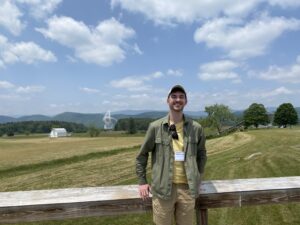
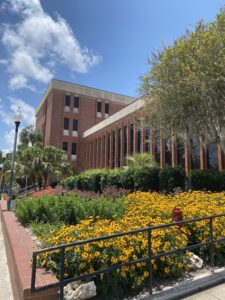
Angelica Pozzi, MSc Mathematical Biology, School of Mathematics and Statistics
I am truly thankful for having been granted the St Leonard’s College Postgraduate Travel Award which enabled me to attend the Epilepsy Workshop 2023 in Birmingham.
During the workshop, I had the opportunity to learn from different stakeholders and get insights for my dissertation project on mathematical approaches to make progress in epilepsy diagnosis. I also had the chance to meet many inspirational people who are working in this interdisciplinary research field. This opportunity also provided me with a deeper understanding that, while personal interests and ambitions are crucial to gain momentum in a research project, team effort is vital for a sustained level of growth and enjoyment.
Kelsey Yuen, MLitt Art History, School of Art History
The St. Leonard’s Travel Fund has been of great help to my research. Writing about the effects the Paris Opera Garnier as a place of spectacle for the 19th century upper class, I am aware that architecture requires in-person inspection to better understand the psychological reception and visitor’s reaction with the architecture’s in. With the refurbishment of the funding for transport and accommodation, I embarked on a 12-day field trip to Paris, where I carried out in person inspection of the architecture by watching an opera in the Opera Garnier, along with archival research inside the Bibliothque de l’Opéra. Seeing the architecture in person had made me observed details that I would not noticed when reading about the Opera Garnier, and the opera experience had allowed me to emerged myself as an audience and to trace how audience in the 19th century, would have similar psychological experience. Aside from that, I also arranged a meeting with a fellow academic, whom my supervisor referred, to talk about theatre as a spectacle. This field trip has provided me with much-needed primary resources and inspiration for my research as a lot of the archives are not available online and had to be viewed in person. With that, I am able to conduct my research with strong support from primary sources.
I would like to give thanks to Prof. Laura Moretti for being my referee as well as the College for the award, it has been an immense help for my academic career.
Janie Olver, PhD Candidate, School of Biology
I appreciate the funding awarded to me by the St Leonard’s College Travel Award. This money helped me to be able to attend the biannual 24th International C. elegans conference that took place at the Scottish Event Campus in Glasgow from the 24th to the 28th of June, 2023. This is the first conference that I have been able to attend during my PhD studies. Thanks to this award, I could attend this conference alongside others in my research group (Dr. Helder Ferreira, BMS Annexe, North Haugh).
My work uses C. elegans to investigate the gene ATRX in humans, which, when mutated, gives rise to the neurodevelopmental disorder ATR-X syndrome. Mutation of ATRX is also associated with many cancers, including those with the worst prognoses. My work aims to uncover what role ATRX usually plays in the cell, as this is currently unclear.
I presented my work in a poster session to an international audience of other C. elegans researchers at this conference. I was able to have helpful discussions with others in the field. These discussions have helped set up potential future collaborations with other groups worldwide.
Below is a picture of me and the rest of my research group on the last day of the conference:
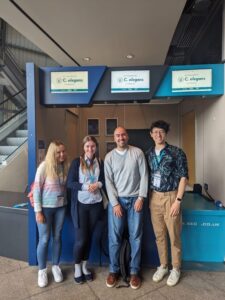
Mi Zhou, PhD Candidate, School of Art History
The St Leonard’s College Travel Award supported my research trip to China from June to July 2023. Towards the end of the third year of my PhD, this archival research has been incredibly important for my dissertation on popular photo culture in 1920s and 1930s China. Centring on the Shanghai region, I also spent time in Suzhou, Nanjing and Hangzhou to incorporate a wider range of my research materials and sources. Specifically, I visited Shanghai Library, Shanghai Municipal Archives, Suzhou Library, Suzhou Archives, Nanjing Library, Second Historical Archives of China, The Local Chronicles of Jiangsu Province, and the Archives Bureau of Zhejiang Province. Additionally, I checked several second-hand stores and discovered a private collection of old photos during my trip. I also visited the Lishui Photography Museum, considered the first photography-interest museum in China, with a growing collection of cameras, photographs and photo-related publications.
This travel helped my research in two main aspects: accessing both primary and secondary sources which I was not able to reach while researching in St Andrews, and gaining insight into the current public and academic interests in ‘old photos’ in China. This aspect will be touched upon in the overall introduction of my dissertation.
Highlights of this travel include being able to examine and flip through the original physical copies of several magazines and photobooks published in the 1920s and 1930s, collected in the Shanghai Library. Magazines are one of the main research subjects in my project, and although I had been exploring digitalised content, experiencing their materiality during this travel provided me with new insights to further develop my chapter arguments. In the city archives, I reviewed potential records and documents, finding several sources that will supplement my arguments and help substantiate the chapters I had drafted in St Andrews. I also encountered a series of periodicals, which I am planning to develop into a new chapter.
The travel also receives additional funding from the Elizabeth Gilmore Holt Travel Award. I extend my sincere gratitude to both travel awards, which helped cover my travel costs to some extent and supported my research.
Georgie Whittome, PhD Candidate, School of Biology
Thank you to the St Leonard’s College travel award for supporting my PhD research. The award was a valued contribution to a trip that allowed me to meet with current and future collaborators. As a first year PhD student, the opportunity to build these relationships early will be invaluable as I continue my research.
My research looks to improve our understanding of the population ecology of Eastern North Pacific blue whales. While conducting field work along the United States West coast this summer, the travel grant supported me going to the Southwest Fisheries Science Center in San Diego. This department of the National Oceanic and Atmospheric Administration (NOAA) is responsible for marine mammal stock assessments on the United States West Coast. My meetings with colleagues from this group led to advice on my PhD research plans, development of research ideas, a deeper understanding of available data for future statistical models and an opportunity to work through challenging coding questions with experts in the field. These interactions have strengthened my PhD research plans and allowed me to build crucial relationships for the future of my project.
Suzuka Komatsu, PhD Candidate, School of Philosophical, Anthropological and Film Studies
St Leonard’s College Postgraduate Travel Award has enabled me to give a presentation at the annual conference of The International Association for the Philosophy of Time (hereafter IAPT) from 27 to 30 July 2023 held in Sydney, Australia. Since this travel award is open to the postgraduate students at any level of study and schools at St Andrews, and it has no geographical restriction for research travel, it was suitable for my situation of travelling to Australia. It helped me decrease the major expense of my travel.
Presenting at the IAPT conference with help of the St Leonard’s Postgraduate Travel Award was beneficial for my research and professional development. The paper I presented at the conference is part of my PhD thesis. Importantly, this conference was a subject-specific conference, namely the Philosophy of Time, therefore I was able to get feedback about specific points in my paper from the fellow students and the leading philosophers in my field. Also, I have just finished the first year of my PhD at St Andrews; and it was a a great opportunity to gain different perspectives from those who attend this conference at an early stage of my PhD, so that I could have enough time to polish my paper by the end of my programme. Further, this conference is a conference created primarily for professionals, and presenting in front of leading philosophers provided a challenging but rewarding experience.
With regard to professional development, attending this conference was quite beneficial for me in terms of networking. This conference’s purpose is to encourage researchers to exchange information and to collaborate in joint projects internationally, and I expected to have an opportunity for collaborative work with the participants of this conference. I had a conversation with one of the presenters about her work during the conference, and we have decided to meet up on zoom to discuss a possible collaborative work. This opportunity was great for me because there are not many researchers in my department who work on a similar topic.
Overall, St Leonard’s Postgraduate Travel Award has supported my research and professional development greatly in that it enabled me to give a talk at IAPT conference. I think I made the most of the opportunity that this travel award has provided. I am grateful that I was able to get this award for my travel and that there is such a travel award which is open for almost all the postgraduate students.
Joel Cabañero Jr., PhD Candidate, School of Chemistry
I am Joel Cabañero Jr., final year PhD student at the University of St Andrews School of Chemistry, supervised by Dr. A. Robert Armstrong and Prof. Russell E. Morris. Last June 18 to 23, I attended the Lithium Battery Discussions (LiBD) Conference in Arcachon, France.
In the conference, I was one of the participants who was chosen to give a talk in the Na/K-ion positive electrodes session where I presented my work on Cu doping of P3-type Mn- and Fe-based layered oxides for sodium-ion batteries. It was a great opportunity to share my recent results to a wider audience composed of other PhD students and experts I look up to in the field. I received insightful questions and feedback about my work, which helped shape future directions of my research.
The conference was also a great avenue to network with other research groups. I was able to establish potential collaborations that will help advance my research. I was happy to meet prominent professors, reconnect with former mentors, and classmates in the Erasmus Mundus master course I graduated from. The schedule also allowed us to enjoy the beautiful sceneries in Arcachon. In particular we went to Dune du Pilat, which is the tallest sand dune in Europe!
I am sincerely grateful to St Leonard’s College Postgraduate Travel Award for partly financing my registration to the conference and making this memorable experience possible.
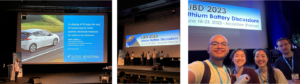
Snapshots of myself while presenting (left), on stage with other presenters answering questions from the audience (center) and with my colleagues (right)
With former classmates (left) and basking in the sun at Dune du Pilat (right)
Matteo Nizzardo, PhD Candidate, School of Philosophical, Anthropological and Film Studies
Two months ago I had the opportunity to attend the Summer School “Reality+”, held in Lugano at the USI Università della Svizzera Italiana.
During the week I spent in Lugano (9-13 June 2023) I met many young reaserchers in the field of Philosophy of Technology, and established what I hope will be long-lasting relationships with many of them. We had amazing philosophical discussions together, which definitely contributed to my academic and personal growth.
I also met established academics working in the field, like Dr Nathan Wildman (Tilburg University), Prof David Chalmers (New York University), and Prof Dr Brendan Balcerak Jackson (University of Bielefeld). I learned a lot from the sessions they held during the Summer School, as well as from the one-to-one interactions I had with them.
This amazing experience was possible in part thanks to the St Leonard’s College Travel Fund, which helped me financially with an award of £125. This award covered my living expenses for the week I spent in Switzerland. I want to thank the St Leonard’s College for the help it gave to me and to the other successful applicants.
Olivia Booker, PhD Candidate, School of Philosophical, Anthropological and Film Studies
My name is Olivia Booker, and I am a final year PhD student in Film Studies. Before moving to St Andrews to pursue my doctorate, I graduated with an MFA in Documentary Film from Stanford University and a BA in Art from Davidson College. My thesis is a practice-led PhD about representations of coastal place in artist moving image and includes a theoretical paper as well as three short documentaries. A significant portion of my thesis engages with the work of Margaret Tait and the ecological sensibilities evident in her film practice that show the potential for poetic filmmaking to express ecological ideas and ways of approaching the physical world.
Margaret Tait was a Scottish filmmaker who lived and worked primarily in Orkney through the second half of the 20th century. A pioneering filmmaker in many ways, Tait’s significant contribution to documentary filmmaking in the UK went largely unrecognized during most of her lifetime, and it has only been in the last two decades that film scholars have begun to acknowledge the importance of Tait’s work in the history of independent Scottish film. My research will add to the growing literature on her unique filmmaking practice and its influence on contemporary filmmaking in Scotland.
The St Leonard’s College Travel Award contributed funds that enabled me to visit the Orkney Archive, which holds a substantial amount of Tait’s materials, including unpublished manuscripts and poems, drawings, personal letters, and notes about her films. I was specifically interested in any materials related to Tait’s use of Direct Animation, a technique of animation that involves marking directly onto the film stock. While not present in most of her work, Tait periodically uses this technique throughout her career, from its first instance in “Calypso” 1955, to her final film, “Garden Pieces” in 1998. While there are some published books and articles about Tait’s work, not much has been written about her use of animation, which makes the archival research that I was able to do even more significant. I was able to find sketches in her notebooks that outlined the movements of the figures in “Calypso”, as well as letters and publication materials that reference Tait’s influences and her thoughts about using animation in her work.[1]
I found the experience of working in the archive to be incredibly rewarding. I didn’t expect it to feel so exciting. There was a joy in finding something that I was looking for, or coming across something completely unexpected that gave me a better sense of Tait’s career and the context in which she was working. This archival research will be included in the final chapter of my thesis, which discusses more-than-human perspectives in Ecocinema. I argue that the way that Tait moves between animation and live action footage within a single film bridges reality with the imaginary in a way that encourages thinking beyond human perspectives.
The opportunity to engage with archival materials significantly furthered my understanding of Tait’s use of animation and provided the insights and context I needed to bring the overarching argument of my thesis together. Including archival research in my thesis also adds another layer of original inquiry to my work, increasing its relevance and contribution to the field. I am exceedingly grateful to St Leonard’s for providing financial support which allowed me to do this archival research on location in Orkney, and sincerely hope that it will continue to support graduate student research in the future.
[1] See Fig 1
Fig 1: Sketch of the movement of the dancing figure in “Calypso” (1955) by Margaret Tait. D97.28.15, Orkney Library and Archive, Kirkwall, Orkney, UK.
Aagje Lybeer, PhD Candidate, School of Art History
‘Body postures in Seventeenth-Century Dutch Male Portraiture’
My name is Aagje Lybeer, I am a Phd student at the University of Ghent and St Andrews. In my interdisciplinary doctoral project Body Pose(d), I reassess body posture in seventeenth-century Dutch male portraiture by connecting the fields of Art History, Communication Studies, Visual Studies, and Digital Humanities. It is important to remember that body poses were, and still are (in)deliberately used to convey meaning and that they are a main determinant in attracting and retaining the viewers’ attention. Before studying art history, I obtained a master in Communication Studies where I became particularly interested in the role of body language in visual communication. During my studies in art history I continued to focus on body language, which my bachelor and master’s dissertations reflect. In both studies, I focus on body poses in the longue durée, specifically studying how specific postures are used time and time again across context and how context and meaning are intertwined. For my PhD I narrowed this focus down to the Dutch seventeenth century, focusing specifically on male portraiture.
Body Pose(d) consists of three major parts, each structured around an unusual (groups of) pose(s). This emphasis on the unusual, enables the exploration of the complex relation between body poses and their decorous or indecorous use. The first part focuses on Frans Hals’ Willem van Heythuysen portraits (United States, Private Collection; München: Alte Pinakothek), and more specifically the relationship between Van Heythuysen’s remarkable postures and paintings of merry companies, a genre which was extremely popular in Haarlem at the time. The second part explores Bartholomeus van der Helst’s (1613 – 1670) naval portraits of Aert van Nes and Johan de Liefde (Amsterdam, Rijksmuseum), and the third and final part focuses of my dissertation discusses the pose that can best be described as ‘looking over one’s shoulder,’ especially focussing on Nicolaes Maes’ portrait of a young man (München, Alte Pinakothek).
In July and August I visited Historisch Museum Den Briel in Brielle to study Bartholomeus van der Helst’s portraits of Aert van Nes and Johan de Liefde, and the Alte Pinakothek in Munich, for Frans Hals standing portrait of Willem van Heythuysen and Nicolaes Maes’ portrait of a young man. These research trips were highly beneficial for my dissertation as it gave me the opportunity to look at the paintings up close. These visits gave me new insights and enabled me to look afresh at the research I had done on these paintings so far. The scale, color, and sense of depth of these paintings, to name but a few remarkable facets, were remarkably different from the reproductions I had worked with during the last couple of years. As these four paintings are key to my dissertation I found it very important to visit these different collections to look at the paintings up close. I really would like to thank St Leonards College for supporting my travels and enabling me to make my dissertation more comprehensive.
Cristian Erazo Romero, PhD Candidate, School of Philosophical, Anthropological and Film Studies
I am a PhD candidate in the Department of Social Anthropology at the University of St Andrews. I was delighted to receive the St Leonard’s College Postgraduate Travel Award in May 2023. This award meant a significant contribution to the funds I needed to pursue my PhD research, entitled ‘Community Leaders as Brokers: Entanglements of Hierarchies and Intimacies in Colombia’s Amazon’. This research looks at how numerous non-indigenous and indigenous female leaders, known as madres líderes (leader mothers), bridge the gaps between local bureaucracy and recipients of cash transfer (CTs) programmes in the Putumayo region of Colombia’s Amazon. A key part of this research involved conducting in-person participant observation and interviews with madres líderes, civil servants, and recipients of CTs in and around the city of Mocoa over one year of fieldwork. This programme of overseas research would not be possible without the help of funds such as the St Leonard’s College Postgraduate Travel Award. This award enabled me to continue my research as planned, helping me to cover living costs and research-related expenses during fieldwork.
Camille Choquet, PhD Candidate, School of Geography and Sustainable Development
I am currently a PhD student at the faculty of geography and sustainable development in St Andrews. I am working on identifying and assessing strategies of conserving the tropical peatlands of the north Peruvian Amazon while supporting and improving the livelihoods of the people who live there. By focussing on the Peruvian Amazon my PhD has naturally involved a rather long period of field work there, which consisted in collection of data by interviews with local actors and visits to rural communities. A variety of grants has helped me finance this trip, and the St Leonard’s College Postgraduate Travel Award was a good complement to pay for my flight back to Europe. Altogether this trip was an excellent opportunity for my studies and future career, to build international connections, be immersed in the local context and get access to information and documents that would not have been possible otherwise. Here are some pictures of the months I spent in the Amazon, visiting rural villages to ask about the conservation and development projects that have passed in the villages along the years and the impacts that they have had.
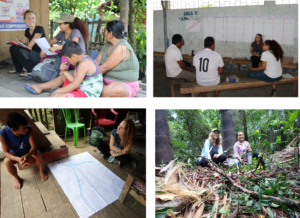
Samantha Bruce-Benjamin, PhD Candidate, School of English
My research requisitely hinges on close study of the paratextual space of the manuscripts of Franco-Scottish miniaturist and calligrapher, Esther Inglis (c.1570-1624), of which there are over sixty extant copies housed at libraries internationally. In an age of digitisation, it is my strong belief not to rely on such images for Inglis studies, given that many – but not all – of her manuscripts are now available online. One has to visit and interact with the tangible artefact, as a large amount of detail (flaps that lift to reveal images, faint marginalia, revision, etc.) can be missed or not be apparent in a digital context. All of this is highly relevant to my study of the paratexts, and in particular the peritextual space, of Inglis’s manuscripts, to analyse how she ‘crafted’ them.
In May, with funding from the School of English and the St Leonards College travel fund, for which I am very grateful, I travelled to London to consult manuscripts by Inglis held at the British Library, which contain a variety of paratexts not previously considered in scholarship. Such physical analysis of the manuscripts revealed clues that help to situate Inglis within early modern social networks, which forms the core of my ongoing research.
In addition, I had spent the previous year negotiating the loan of a never-before-seen manuscript by Inglis, Argumenta in Librum Geneseos Estherae Inglis Manu Exarata Londini 1606, to the University of St Andrews. It was displayed during July of this year at the 17th Triennial International Conference on Medieval and Renaissance Scottish Languages, Literature and Culture, of which I was Conference Secretary. The manuscript has been held privately by a family who very kindly allowed me unique and privileged access for my research. As the only scholar to be afforded this privilege, the trip to London, facilitated in part by the St Leonards College travel fund, proved memorable and highly enjoyable in effecting the handover of the manuscript from the family to members of staff at Martyrs, who returned with it to St Andrews where it was subsequently displayed at the Wardlaw Museum.
Connor Hickey, PhD Candidate, School of Classics
As a recipient of the St. Leonard’s Postgraduate Travel Award, I was accorded the opportunity of attending the 2023 JACT Greek and Latin Summer School, hosted by St. John’s College, Durham University. My research project – The Roman Conceptions of Rebellion in Latin Historiography – examines the Roman notions of insurrection as reported in Latin historiographical texts from the Imperial period. Through analysis of the ancient discourse of unrest, my dissertation illustrates the literary constructions Roman authors used to position the uncomfortable topic of insurgency within their narratives of the Pax Romana, whilst further emphasizing the mechanisms through which a colonial power could impose its views of empire, the ‘imperial project’ and the subaltern on posterity. Naturally, this focus on the ideological structures of ancient narratives requires intricate engagement with the textual evidence in its original Latin and, as such, a firm grasp of Latin vocabulary and its grammatical concepts is an essential component for my research. Accordingly, the JACT Greek and Latin Summer School provided the opportune environment in which to cultivate and expand my existing knowledge of the language for my thesis.
The Summer School was conducted over the course of an intensive week from the 22nd to the 28th of July, during which, my classmates and I were enrolled in Intermediate Latin. In a series of fifteen one-hour sessions, our tutor, Matthew, guided us through the translation of adapted Latin texts, whilst refamiliarizing and cementing our comprehension of key grammatical concepts (such as subjunctives, participles, and indirect statements). The texts we worked with consisted equally of both Latin prose and poetry, namely Cicero’s Against Verres, Sallust’s The Catilinarian Conspiracy, the poems of Catullus, and Virgil’s Aeneid.
Following each session, my classmates and I undertook independent study, before we were invited to attend a series of seminars from visiting speakers hosted by the Summer School. Dr Anna Judson (Durham) presented an evening lecture which focused on writing and material culture in Roman Britain. Later, Professor Ted Kaizer (Durham) – whose research centres on the Classical Levant – gave a seminar on his research into ‘Identity at Tadmor-Palmyra’, with Dr Esther Meijer (St. Andrews) also presenting a paper on ‘Fragmentation and Displacement in Seneca’s Trojan Women.’ Participants of the course were likewise encouraged to give talks and workshops on research they had conducted. As such, Sally Mubarak (St. Andrews) presented a paper which focused on her recent examinations of burials and the war dead in the Mid-Republican Roman period.
Though two Latin sessions were run for the morning of 26th of July, the day was largely dominated by a group tour to a section of Hadrian’s Wall (specifically the Roman Fort at Chesters). This was a particularly significant and insightful excursion, as a component of my dissertation explores the conception of ‘internal’ and ‘external’ boundaries in the Roman state. In particular, I am interested in addressing the complicated issue as to whether the Romans regarded rebellions to be a form of ‘internal’ conflict, as the notions of internal ‘state boundaries’ (an idea solidified in the sixteenth and seventeenth centuries) were not as clearly defined (or conceptualized) in the Roman period. As such, Hadrian’s Wall stands as a particularly striking case-study for addressing this issue, as the site constitutes a notable instance in which some form of territorial separation was envisaged and demarcated by the Romans, specifically through the construction of a physical military barrier which divided the administrative boundaries of the province of Britain from the ‘external’ territories beyond.
The St. Leonard’s Postgraduate Travel Award has, thus, proved pivotal in providing me with this opportunity for developing my research skills and engaging with such issues for my dissertation. Logistically, the award supported the purchasing of books and materials necessary for the course, as well as subsidising my travel expenses to Durham. Moreover, the award allowed me to participate in a course that was specifically tailored to my language requirements, significantly enhancing my research capabilities and overall academic development. I am, undoubtedly, better equipped to undertake a translation of Latin prose texts and have become better acquainted with the archaeological site of Hadrian’s Wall and its significance. In sum, I am grateful to the St. Leonard’s Travel Award for helping me to pursue this important opportunity for research development.
Carolina Zaccato, PhD Candidate, School of International Relations
My name is Carolina Zaccato, and I am a PhD student at the School of International Relations (IR) at the University of St Andrews (Student ID 210019436). I am also a Graduate Teaching Assistant (GTA) within the School of IR, a workshop leader at the Centre for Education Enhancement and Development (CEED), and a fellow of the Centre for Global Law and Governance (CGLG) at the University. Besides, I am an associate lecturer at the Master’s in International Studies at the University Torcuato di Tella (Argentina), and a fellow of the Argentine Council for International Relations (CARI) and of the Regional Coordinator for Economic and Social Research (CRIES).
Last July, I obtained a St Leonard’s College Travel Award. As a recipient of this award, I was granted £125, which I used to partially cover my conference expenses for the term. During the second term of 2022/2023, I took part in two large IR conferences: The International Studies Association (ISA) annual convention, titled ‘Real Struggles, High Stakes: Cooperation, Contention, and Creativity’, which took place between the 15th and 18th of March, 2023, in Montreal, Canada; and the British International Studies Association (BISA) 2023 annual convention, titled What can International Studies contribute to a summit of the future?, which took place between the 21st and 23rd of June, in Glasgow, Scotland.
At ISA 2023, I presented research at two panels, and also acted as one of the discussants in a roundtable. First, I presented the paper “Making a Regional Order: Norm Localisation, Contestation and Innovation in South America”, which builds on my PhD research at St Andrews, at the panel ‘Making Order Among Sovereign States’, was part of the English School Section of ISA, with presentations from Dr Michael Williams (Syracuse University), Dr Dennis Schmidt (Durham University), and myself, and chaired by Dr William Bain (National University of Singapore). Then, I presented the paper “The long road to cooperation: The evolution of the nuclear relationship between Argentina and Brazil” at the panel ‘Building states, shaping orders: Latin America and Historical International Relations’. The panel was part of the Historical International Relations and English School Sections of ISA, and was chaired by Dr Yale Ferguson (Rutgers University), with presentations from Dr Tom Long (University of Warwick), Dr Luis Rodriguez (Stanford University), and me. Finally, I participated as a discussant in the roundtable “On Walks, Rest, and Retreat in (And away from) International Relations Scholarship”, alongside my PhD colleagues from St Andrews: Q Manivannan, Sarah Gharib Seif, and Aristidis Agoglossakis Foley. This roundtable was born out of our collective IR PhD writing retreat in The Burn in May, 2022, as a space to reflect on our work as scholars in training, and what it means for us to be ‘doing IR’ from St Andrews, the different interrelations between work, rest and retreat, and how these inform our research, and our academic, professional, and personal profiles. Furthermore, I also took part in the one-day seminar of the ISA Latin American Caucus, which took place on the 14th of March, one day before the conference, and where I could network and reconnect with colleagues from across the region.
At BISA 2023, I presented research at two panels, and chaired twice as well. First, I chaired the panel ‘Regionalisms in the Americas, North and South’, where I discussed presentations by Dr Tom Long (University of Warwick), Dr Pia Riggirozzi (University of Southampton), Dr Markus Fraundorfer (University of Leeds), Dr Andrea Bianculli (IBEI, Barcelona), and PhD Candidate Ludovic Arnaud (University of Oxford). Then, I presented the paper “A defensive notion of regionalism: The Pan-American Conferences and the emergence of a Latin American regional space”, at the panel ‘Historical Colonialisms and World Orders’, alongside Dr Gregory Stiles (University of Sheffield), and PhD Candidate Huu Phu Gia Nguyen (University of Sussex). I also acted as the chair of this panel, discussing my colleagues’ work and finding common grounds with mine. Finally, I presented the paper “The long and winding road to nuclear amity: The Argentine-Brazilian nuclear rapprochement as viewed from the Punctuated Equilibrium Theory”, at the panel ‘Nuclear Politics’, together with Dr Nicola Leveringhaus (KCL), who is the convenor of BISA’s working group on nuclear politics, and Dr Ian Turnbull (Findhorn Foundation Community).
Below, you will find some pictures of my participations in these conferences:
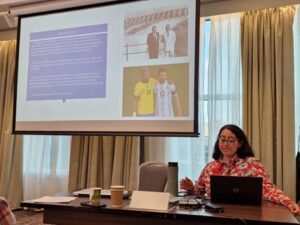 Presenting at the panel ‘Nuclear Politics’. BISA, June 2023, Glasgow

Presenting at the panel ‘Historical Colonialisms and World Order’, BISA, June 2023, Glasgow

Presenting at the panel ‘Building States, Shaping Orders: Latin America and Historical International Relations’. ISA, March 2023, Montreal
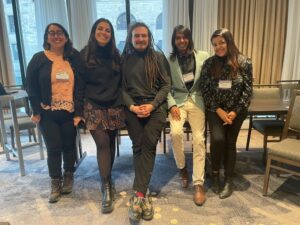
Discussant at the roundtable ‘On Walks, Rest and Retreat in (and away from) International Relations’, ISA, Match 2023, Montreal
Eric Foster-Whiddon, PhD Candidate, Schools of Divinity & Classics
I am a third year PhD candidate in Divinity and Classics, researching the Gospel of John in comparison with Greek and Latin novels. The St Leonard’s College Postgraduate Travel Award covered a portion of my expenses to attend the European Association of Biblical Studies annual conference in Siracusa, Sicily in July 2023. I presented a paper from my thesis in the inaugural Johannine Literature section. As a major conference in the field, presenting at EABS provided helpful feedback from other PhD candidates, early career researchers, and senior scholars. Along with the privilege of sharing my research, establishing and strengthening professional connections proved to be rewarding on many levels. Further, Siracusa is an important setting in several of the Greek texts with which I work. The city has many Greek, Roman, and ancient Christian archaeological sites which I was able to visit on tours organized by the conference and guided by scholars. Exposure to material culture adds significant perspective and depth to my research. While online participation has many benefits, the experiences which I found so rewarding at EABS 2023 are only available when attending the conference in person. The St Leonard’s College Postgraduate Travel Award, along with funding from the School of Divinity, helped cover a significant portion of the expenses required for in-person attendance. As a mature postgrad with a family, I would not be able to take advantage of such opportunities without this generous support.

Blair Barnett-Johnston, MLitt Philosophy, School of Philosophical, Anthropological and Film Studies
This summer, I was generously awarded the St Leonard’s College Postgraduate Travel Award in order to develop in my project looking into the topic of colonialism and conceptual loss by attending the 2023 Munich Graduate Conference in Ethics (MGCE). At the graduate conference, I received immensely helpful feedback on my project from a current postdoctoral student (and former St Andrews PhD) at the Ludwig Maximilian University of Munich which was a brilliant opportunity to receive valuable insights that will be enormously helpful for me in terms of advancing my project further. Moreover, the talk and the subsequent feedback that I received by engaging with other students and senior lecturers has also allowed me to really improve upon a paper that I have been working on which captures my work on the topic thus far. I also received a number of helpful recommendations for further reading related to my topic from academics working in adjacent areas as well as potential areas to look into in order to embellish my project further. I am confident that the feedback and suggestions that I received will allow me to bring my paper closer to being submittable for publication in philosophy or political theory journals. In addition to being enormously helpful for my project employing tools from moral philosophy to explore colonialism and conceptual loss, the opportunity to attend and present at such a prestigious graduate conference is something that I am certain was highly beneficial to my overall academic development going forward into further postgraduate study. In particular, I feel as though I really profited from having the opportunity to practice presenting publicly on my work as well as being able to practice the skills surrounding presenting work in a more public forum and responding to subsequent comments and insights on that work; skills that I am sure will be incredibly valuable for my academic development given my intention to pursue further graduate study in philosophy.
Dante Clementi, PhD Candidate, School of Divinity
The generous funding from St Leonard’s College allowed me to undertake an invaluable research opportunity at the Søren Kierkegaard Research Center, housed at the University of Copenhagen. As a second-year PhD candidate in the School of Divinity, where I’m writing a thesis on the Danish philosopher-theological Søren Kierkegaard, this funding made possible a 5-week research stay at the research center by allowing me to partially cover the cost of my accommodation in Copenhagen. This stay was invaluable not only for the vast material archives at the center but also for the opportunity to present my research to foremost scholars in the field of Kierkegaard studies. This opportunity provided me both with important feedback on the trajectory of my research and the experience of engaging with important colleagues in my field. As a result, a faculty member of the research center has agreed to support me with a letter of recommendation, which would not have possible had I not had the opportunity for a research stay at the center. I would like to express my thanks to St Leonard’s College for generously funding my research and making possible an opportunity that has proved invaluable to my future career prospects.
Patrick J. Winther-Larsen, PhD Candidate, School of Philosophical, Anthropological and Film Studies
Thanks to the support of St Leonard’s College, my department, and the respective organisers, I was fortunate to give talks at the above-mentioned conferences this summer, which took place at the University of Manchester and LMU Munich, respectively. The financial support I received from St Leonard’s College, in particular, was instrumental in my decision to participate in the conference in Munich. Among other things, I was able to secure accommodation in the immediate vicinity of the venue, which meant I could focus on the material I was presenting without worrying about commuting in a city I hadn’t visited before.
Both of my talks went well, and I was able to do quite a bit of networking, both with people I had previously corresponded with or met at other conferences. At LMU’s CEPP (Centre for Ethics and Philosophy in Practice), for instance, I had the opportunity to talk about their fellowship programme, which I hope to apply to at the end of my degree. In addition, I had many fruitful talks with Alex Edlich, who has authored a paper on third-party blame, which was the topic of my talk. I am grateful to my benefactors for their support, which allowed me to avail myself of the opportunity to present my recent work to international audiences.
I found the positive feedback I received very motivating and I now feel emboldened to try to get my research published in the near future. To conclude, the conference trips I undertook this summer had a positive impact on my studies, and I hope to make many more (both within the UK and internationally) during the rest of my stay at the University of St Andrews.
Luka Benedicic, MRes Social Anthropology, PhD Candidate, School of Philosophical, Anthropological and Film Studies
MINDFUL LIVING IN THE PLUM VILLAGE MONASTERY in Ljubljana, August 20th, 2023
As a Master of Research student in Social Anthropology, I have conducted ethnographic fieldwork as the basis for my dissertation. This is because social anthropology as a discipline requires that the researcher conducts immersive fieldwork in the geographic and cultural situation which one wishes to study. Personally, I have traveled to Plum Village, which is a Buddhist monastery near Bordeaux, France.
Plum Village is open to lay visitors, who may also attend retreats guided by the monastics. But since there is high demand to visit the monastery, there is a lot of pressure on its accommodation facilities. Thus, spending an entire month there can become very costly, as it has been in my case. Fortunately, St Leonard’s College Postgraduate Travel Award has made a substantial contribution in covering the expenses associated with accommodation. As a result, I was able to conduct fieldwork as part of my MRes training. This approach facilitated the collection of firsthand data for my dissertation, which was successfully submitted in mid-August.
To summarize, the travel award not only helped me to fund a project that greatly enhanced my research skills and academic proficiency, but also substantially improved the quality of data gathered for my dissertation. With a portion of the financial responsibility lifted, I also had more time and mental clarity to dedicate to my dissertation and other assignments.
Emanuela Nadia Borghi, PhD Candidate, Schools of Medicine and Philosophical, Anthropological and Film Studies
My interdisciplinary doctoral project, titled Rethinking the Female Body After Violence, will contribute to the anthropological debate on gender-based violence, trauma, and mental health issues. This project is based both at the Department of Social Anthropology, under the supervision of Dr Stavroula Pipyrou, and the School of Medicine. The supervision of Professor Alexander Baldacchino (Chair in Medicine) allows me to analyse in-depth mental health issues in female survivors. Based on long term fieldwork (2021-2022) among survivors and migrant women seeking help in women’s NGOs in Italy, this research explores the impact of the medicalization of trauma and mental illness on survivors’ vulnerability, across their everyday lives as well as therapeutic and medical domains. My dissertation aims to provide an intimate view and understanding of survivors’ everyday lives and practices that exist within macro dynamic of socio-political power relations and gender inequalities. Furthermore, my dissertation contributes to ethical reflections on the presence of vulnerable individuals involved in research. The findings of this research provide information that can potentially illuminate trauma-informed and person-centred approach to mental health issues in survivors.
The project is articulated in three phases:
Phase 1 (Sept. 2020-June 2021): theoretical and methodological preparation for fieldwork; Training in Ethics and Risk Assessment.
Phase 2 (July 2021-July 2022): Twelve months of ethnographic research (Italy)
– The multisided fieldwork took place in Milan and Monza to expand on material collected in 2018 at the NGO SVS Donna Aiuta Donna Onlus, located in Ca’ Granda Ospedale Maggiore Policlinico [Milan’s primary public hospital], Caritas Ambrosiana and other NGOs belonging to the D.i. Re, Milan Anti-violence Network.
– The research fieldwork based within the Anti-violence Network of White Mathilda NGO in Monza, Desio and Limbiate focused on psychological support services for survivors of gender-based violence.
Phase 3 (July 2022-2024): Writing up period (dissertation, conference papers, and academic publication)
-Reflection on the ethnographic material collected by attending Writing up seminars, Gradskills courses (Academic skills), and STAR 2 & 3 residential/online workshops.
-Reflection on the narratives of mental health issues in survivors during a research period as a visiting student at the University of Oxford, School of Anthropology and Museum Ethnography as a Visiting Student from 15th January 2023 to 11th March 2023, under the sponsorship of Professor Elisabeth Hsu.
I utilised this grant to cover a part of the travel and accommodation expenses for the visit to the School of Anthropology and Museum Ethnography at University of Oxford as a visiting PhD student, under the sponsorship of Professor Elisabeth Hsu. During the visiting studentship (January/March 2023) I attend research seminars, workshops, and a variety of academic activities coordinated by the MPhil in Medical Anthropology at the University of Oxford. This visit allowed me to strengthen my medical anthropology background to best conduct my multidisciplinary doctorate and receive mentorship and feedback on my dissertation and future academic publications. I gained an in-depth understanding of anthropological approaches to the phenomenology of the body and the coexistence of biomedical and humanitarian interventions in dealing with mental illness. This specific knowledge is a fundamental conceptual bridge that brings into dialogue my ethnographic data on survivors’ mental health with the biomedical approach to psychiatry.
Honor Hamlet, PhD Candidate, School of English
The St Leonard’s College Travel award went toward the cost my return flight to the States, in order to pursue archival research at the Bancroft Library, Berkeley. I was able to access The Jack Spicer Papers, a collection of letters, drafts, manuscripts, and personal ephemera relating to the Californian poet Jack Spicer (1925-1965).
Jack Spicer, in his lectures, proposes a “Martian” theory of poetic dictation. In this account, the poetic process is facilitated by resources completely alien to the self. Although the theory is well developed in Spicer’s academic prose, this idea, and others such as the distinction between poetry and prose, permeated his correspondence giving me a much broader and contextually rooted understanding of Spicer’s thought. For example, Spicer would describe his exile in Boston as “Marsless”, or consider someone to be Martian or non-Martian even outside of the creative context. Archival research has provided invaluable depth to my study of Spicer, and the poem drafts in particular have allowed me to engage more profoundly and sensitively with his creative work.
The trip, archival setting, and archival content all provided material for a long prose poem. I begin with a Californian context, and a protagonist in a similar position to my own except as a native Californian. The narrative then moves to an otherworldly setting, through mediation of the archives and interrupted by frequent reflections on the protagonist’s ‘past’ in California. One portion is inspired by the documentation of the construction of the library itself, which was on display at the time of my visit. Another references an interactive project based around Strawberry Creek, the small stream which runs through the Berkeley campus. There is a general theme of interpersonal relationships in the writing, tying into the more intimate arcs of Spicer’s associations, as well as aiming to deal with the concept of epistolary literature more reflexively. I play a lot with tone to explore this problem of address.
The St Leonard’s College Travel award, in combination with other funding, enabled travel that I found hugely rewarding both academically and creatively. Unfamiliar settings and situations always have a strong influence on my work. I’m very grateful to have been allowed this opportunity.
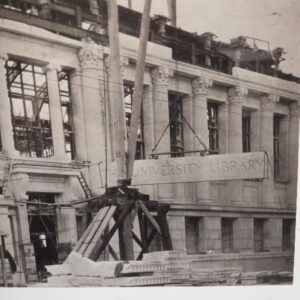
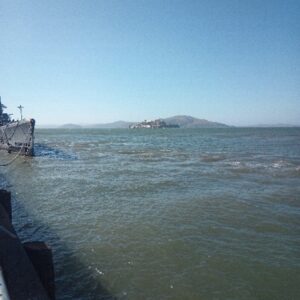
Kairui li, PhD Candidate, School of Mathematics and Statistics
I am deeply appreciative of the financial assistance extended to me by St. Leonard’s College. Their support through the travel fund, which amounted to £125, played a pivotal role in making my participation in the “ Topics on Neuroscience, Collective Migration and Parameter Estimation” workshop held in Oxford a reality. The financial aid I received partially
covered the travel cost, which alleviated the financial burden associated with attending this intellectually enriching event. During my time at the workshop, I had the privilege of presenting a poster that showcased my research endeavors, contributing to the vibrant exchange of ideas that defined the event. Beyond my own presentation, I actively engaged with a multitude of other presentations, each offering novel insights and fresh perspective in the intersecting domains of Neuroscience, Collective Migration and Parameter Estimation. The journey to Oxford is a wonderful experience. This exposure not only broadened my horizons but also fostered invaluable connections with fellow researchers and scholars. It brought together experts to explore the dynamics and self-organization mechanisms at various scales and to develop mathematical models for their description. I am grateful for the financial support from St Leonard’s College, and I hope there are further funding opportunities that would facilitate my participation in equally enriching academic gatherings.
Shristi Rana, PhD Candidate, School of International Relations
The travel fund from St. Leonard supported me to go to Nepal to do field research.
My PhD is on examining Nepal’s peace process particularly focusing its locally-driven and success dimensions. As part of my field research, I investigated the locally-driven aspect of Nepal’s peace process engaging with questions such as: why is Nepal’s peace process locally-driven? How did the locally-driven approach interact with external support? Did the locally-driven approach led to the success of Nepal’s peace process? How? Why Nepal’s peace process is considered as successful?
I interviewed the key signatories of Nepal’s peace process to explore the abovementioned questions. I also interviewed the people who were in the negotiation teams during the peace process. They include the prominent leaders from the mainstream parties as well as the rebel forces.
This field research in Nepal has been immensely helpful to explore my research questions. Given Nepal does not receive much global attention, academic work on Nepal’s peace process has been limited. Therefore, it was important to use interviews to investigate different aspects of Nepal’s peace process. I am thankful that through the support of the award, I was able to travel to Nepal and gain insights on Nepal’s peace process by interviewing the key political actors.
Benoît Gaumé, PhD Candidate, School of History
My name is Benoît Gaumé, I am a third year PhD student, and was among the lucky ones to have been granted St Leonard’s Travel Awards. After having spent an entire year doing historiographical research in St Andrews, my thesis led me to the French national archives in Paris for an entire year. I was there able to continue my studies on the role of trade in the diplomatic dynamics between France and its neighbors in the outbreak of the Nine Years War (1688-1697). Despite my limited finances, this extensive stay in Paris was an absolute necessity for such a thesis subject. Unfortunately, it is a truism to complain about the living cost of Western European capital cities in these times of inflation and economic scarcity. My non-funded status forced me to look for any financial help and, as you can imagine, my search met little success leaving me with no other choice than to keep looking and hoping.
Even though this travel award arrived in the last few months of my stay in Paris, it really made the difference. While my flat was in the outskirts of the city, my archives were situated in the very heart of Paris and in La Courneuve. Your donation of £125 therefore served to finance my journeys between these two places. My foreign student status prevented me from benefiting local student transport discounts which forced me to pay my tickets at full price. Transports were an important part of my monthly expenses, and it was therefore a relief to receive your award. From then, I did not have to worry anymore about optimizing my transport budget. I could travel more freely inside the city and, more importantly, was able to entirely focus on scanning, reading, and making sure that nothing was left unattended. As a result, I have successfully finished my objectives before August which would not have been that easy without this award. I am very grateful to have received it and take this report as an opportunity to express my thanks
Petronella Randell, PhD Candidate, School of Philosophical, Anthropological and Film Studies
The funding I received from the St Leonard’s College Postgraduate Travel Fund enabled me to go to the XII International Society for Utilitarian Studies conference, held at LUISS Guido Carli in Rome. The funding specifically covered the travel costs of the trip. I would not have been able to afford the cost of the trip without the funding awarded to me. Attending the conference has had a big impact on my studies. It gave me the opportunity to explore a research idea of mine in more depth, and to then present that to a multidisciplinary audience consisting of philosophers, economists and political scientists. Receiving feedback from people outside my field of philosophy was especially helpful. I also had the opportunity to network with a number of researchers, two of whom I have kept in contact with and continued to discuss my research with. Developing relationships with other researchers was particularly rewarding and has helped my studies immensely.
Nathan McAllister, PhD Candidate, School of Philosophical, Anthropological and Film Studies
This award assisted my travel to Papua New Guinea for fieldwork, make a contribution to the cost of my flights and my accommodation while transiting. One year of fieldwork is a necessary part of doing a social anthropology PhD. In fact my thesis centres around insights gained during that year of fieldwork, as well will any future research contributions I produce. To do so I needed to arrive my fieldsite Duau (pictured below), which the award helped me to do.
Tomasz Plaskocinski, PhD Candidate, School of Physics and Astronomy
I am pleased to present this post-conference report detailing my participation in the EQEC/CLEO Europe conference, which was held in Munich, Germany. I would like to express my gratitude to the St Leonard’s College Postgraduate Travel Award for their generous support that enabled my attendance at this significant event. As a third-year student, this conference has been instrumental in enhancing my academic journey and fostering professional growth and as the conference is organised once every 2 years, this was my last opportunity to attend as a student.
The EQEC/CLEO Europe conference provided an invaluable platform for me to showcase and share my research endeavours with a diverse and knowledgeable audience. The central focus of my project, which involves the integration of optical trapping and metasurfaces, was met with great interest and constructive feedback. Presenting my research sparked insightful discussions and potential collaboration prospects.
The conference’s multifaceted offerings exceeded my expectations. The wide array of workshops, networking sessions, and talks deepened my understanding of cutting-edge advancements in the field of optics. Engaging with fellow researchers, academicians, and industry experts expanded my perspectives and provided insights into emerging trends and challenges.
I am confident that my participation in the EQEC/CLEO Europe conference has enriched not only my personal and academic journey but also contributed to the University of St. Andrews and the broader optics community. The knowledge and insights gained will be integral to my ongoing research endeavours and academic pursuits.
I extend my appreciation once again to the St Leonard’s College Postgraduate Travel Award for their crucial support. It is my intention to explore additional funding sources to further supplement this award and ensure that I can continue to engage in such invaluable learning experiences.
In conclusion, attending the EQEC/CLEO Europe conference was an exceptional opportunity, and I am sincerely grateful for the support that made this experience possible. The knowledge acquired, connections established, and ideas exchanged will undoubtedly leave a lasting impact on my academic and professional journey.
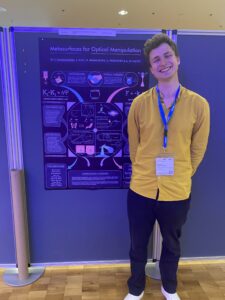
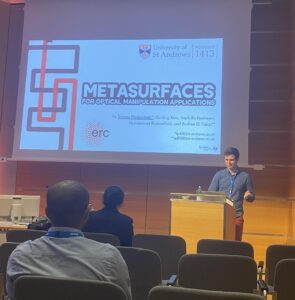
Anna Nolte, MLitt Art History, School of Art History
The postgraduate travel funding awarded by the St Leonards College facilitated my attendance of the École du Louvre Summer School in Paris as part of my MLitt Art History studies. This abundant summer programme, centred on French Museology, included lectures by leading museum professionals of Parisian cultural institutions, immersive museum visits and even an excursion to the Chateau de Versailles. This course gave me invaluable insight into the organisation of museums, French art history and contemporary museological questions such as restitution or interculturality. The programme constituted a highlight of my studies in St Andrews and enriched my art historical education by museological perspectives. Even more, it contributed to my formation as a future professional in the cultural sphere. Outside of the programme, I was able to discover the tourist attractions of Paris, whether by strolling through the music-filled streets during the Fête de la Musique or by watching a ballet performance of Manon in the Opera Garnier. For the financial support of this incredible study experience I would like to thank the St Leonards College.
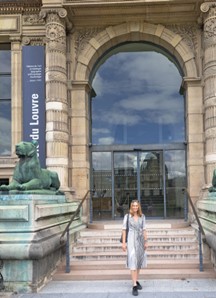
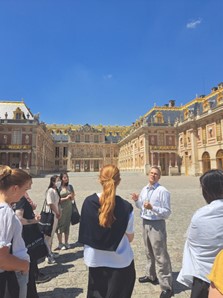
Haotian Chi, PhD Candidate, School of Biology
Report on CRISPR Conference 2023, Würzburg, Germany, June 26-July 2 2023
I was fortunate to receive a travel grant to attend the CRISPR Conference 2023, held in Würzburg, Germany from June 26 to July 2. This conference brings together leading academics on various aspects of CRISPR biology to share cutting-edge research and ideas. Attendance supports my doctoral studies in the type III CRISPR system.
The travel funding allowed me to fully participate in the multi-day conference, including these highlights:
Presenting my research poster titled ‘The type III CRISPR system of Bacteroides fragilis functions via a novel signal molecule’ during the poster sessions. I received valuable feedback from experts in my field that will inform my continuing studies. And I am also awarded a poster prize at the CRISPR Conference 2023 in Würzburg, Germany (The certificate is attached in the next page).
Attending excellent talks presented by world leading researchers working on CRISPR biology ranging from genetics, biochemistry, structural biology, ecology, evolution, and applications. Hearing their insights and innovations was inspirational and expanded my perspectives.
Networking with fellow graduate students as well as senior academics. I made connections that could lead to future collaborations.
I am very grateful that the travel grant enabled me to participate fully in this conference. It truly enriched my graduate studies and advanced my research capabilities.
Adam McIlroy, MLitt Classics, School of Classics
The St Leonard’s College Postgraduate Travel Award was very helpful for me as it afforded me the chance to go to Greece and share my ideas at a conference. I am a postgraduateclassics student at the St. Andrews and, after an essay I wrote on the ancient Roman playwright, Terence, scored very highly, I decided to take my ideas on the road.
I looked for an appropriate conference for quite some time, finally settling on the University of Ioannina’s, as it was the perfect fit for me. I got the chance to speak and connect with other students and academics with similar interests to mine. I tested my preparation and research skills, my public speaking and presentation skills, and, I think most usefully, I got
to feel the sustained pressure of fielding questions from a room full of people about my subject of interest, including some very rigorous academics.
This conference was useful to me in two further very important ways: firstly, I was able to augment and develop my ideas after discussion with others, and to close some gaps in my knowledge. Furthermore, my paper will be published in the conference’s journal. This means that not only am I able to say that I have developed some key skills for an aspiring
academic, but that, at only Master’s level, I will be a published writer in the academic world. I warmly thank the St Leonard’s College Postgraduate Travel Award providers unreservedly for facilitating this success of mine.
Addy Cross, MRes Social Anthropology, School of Philosophical, Anthropological and Film Studies
My name is Addy Cross, and I studied for an MRes in Social Anthropology at the University of St Andrews. In
June 2023, I completed four weeks of fieldwork in El Salvador to gather data for my final dissertation on the
social impacts of cryptocurrency integration on the Salvadoran economy. This fieldwork was made possible in
part by the St Leonard’s travel award, which I was granted in May 2023.
I chose to study technology and the anthropology of economic change for my MRes dissertation because I
wanted to challenge myself. I have historically worked in migration affairs in Central America, but became
fascinated by the social relationships formed via cryptocurrency when Bitcoin was mandated as legal tender in
El Salvador in 2021. I was living in San Salvador at the time and was privileged to the immediate impacts of the
policy in my personal and professional circles. I never thought that I would have the opportunity to return to El
Salvador to study the phenomenon further.
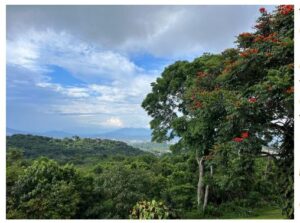
The story of Bitcoin in El Salvador is complex and surreal. One of its earliest champions was an evangelical Christian
missionary from California who moved to a small coastal community called El Zonte to start a charity organisation. A
few years on, the organisation received an anonymous donation of $100,000 in Bitcoin for the purpose of creating
the ‘world’s first Bitcoin circular economy.’ Bitcoin is a non-centralised peer-to-peer digital currency. Its grassroots
introduction to El Salvador was particularly remarkable given the estimate that approximately 70% of the country’s
population does not have a bank account. Despite this challenge, El Salvador’s young, charismatic president Nayib
Bukele was inspired to mandate Bitcoin as an official legal tender for El Salvador. All Salvadoran businesses are expected to accept Bitcoin under the Bitcoin Law, which was approved by the Legislative Assembly in June 2021.
There has been significant media coverage and preliminary academic research on the practical challenges
associated with Bitcoin integration in El Salvador such as access, volatility concerns, and lack of transparency
surrounding government spending in Bitcoin. However, less attention has been granted to the social changes
this policy incurs, especially the potentially exploitative foreign investment that Bitcoin attracts to El Salvador.
This is what I set out to investigate through my dissertation research.
Through my research, I found that a new kind of migration is becoming relevant for El Salvador, and it’s a far cry from the historically understood patterns of Salvadoran labour migration to the United States. I was surprised to learn that a significant group of expats have migrated to El Salvador from countries such as the U.S. and Canada in search of what they describe as ‘financial freedom’ through the Bitcoin Law. This group of individuals seems to exercise a significant amount of influence over government policy surrounding Bitcoin and are vocal in their support for President Bukele. I am excited to analyse this emerging phenomenon as I draft my dissertation and am curious about how it may subvert traditional ideas on migration, refuge, and liberty.
With the data collected during my dissertation fieldwork I hope to provide a new perspective on a technological phenomenon emerging not just in El Salvador but in economies around the world. I believe that understanding the ideas behind these changes is vital to mitigating harm as our monetary systems evolve.
Thank you again to St Leonard’s Postgraduate College for helping to make this research possible!
Zehra Kazmi, PhD Candidate, School of English
I am Zehra Kazmi, a final year PhD candidate at the School of English. My thesThe St Leonard’s Travel Award (£125/-) helped me attend the GAPS (Gesellschaft für Anglophone Postkoloniale Studien or the Association for Anglophone Postcolonial Studies) Conference held at the University of Konstanz in Germany from 17th-20th May, 2023. This award covered my airfare for the trip (London-Zurich-London). Tasavvur Collective, a collective that I co-founded with colleagues in Edinburgh and Exeter, presented our papers as a part of a well-received joint panel on ‘Home as Architectural Framing of Identity in Postcolonial India’. My paper was titled ‘Romancing Ruins: The Symbolism of Architectural Memory in Gulabo Sitabo’, which analysed the ways in the space of the home becomes politicized to reveal commentary about contemporary Muslim identity in India. GAPS is one of the most esteemed conferences in postcolonial studies and I had the opportunity of networking with renowned names in the field as well as attending a keynote lecture by Dr. Homi K Bhabha.
Our collective is now also working towards bringing out a special issue with South Asia: A Journal of South Asian Studies and this conference allowed us a great opportunity to interact to brainstorm the specificities of this. I am grateful for the opportunity to have attended such a prestigious event with the support of St Leonard’s College funding.

Phoebe MacIndoe, PhD Candidate, School of English
In February of 2023 the Medieval Academy of America met in Washington DC to hold their annual meeting, this time with an attached one-day workshop run by the Digital Medieval Studies Institute. Thanks to the generosity of the St Leonard’s College Travel Award, I was able to attend both events.
The Digital Medieval Studies Institute workshop consisted of classes in the Text Encoding Initiative guidelines, a set of standards for encoding medieval manuscripts. There Kıvılcım Yavuz taught both the reason behind the TEI and how to encode data from manuscripts. From this I will be able to parse the code behind digital editions, if they are open access, to see how each editor has interpreted these guidelines. I am also now able to offer practical solutions, using my catalogue of blank spaces, to the vague guidance offered to the coding of blank space.
The wider conference gave me access to academic contacts to help in this aim, and to forge partnerships between PGRs internationally. The panels included specific panels on using digital tools and expanding the audience for medieval studies where I connected with Kristen Haas Curtis (University of Bern) who has agreed to talk at an event I am planning in St Andrews.
In attending these events, not only was I able to broaden my own scope of study, I was also able to connect with other PGs and forge international connections.
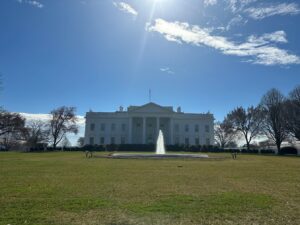
Lorenzo Sapochetti, PhD Candidate, School of Philosophical, Anthropological and Film Studies
Thanks to the St Leonard’s Travel Award, I could cover some of the costs of participating in the International Associations for the Study of the Commons’s (IASC) biennial conference in Nairobi, Kenya, in June 2023.
The IASC is recognised worldwide for its fundamental contribution to studying sustainable development and the commons, and its biennial conference is a global event that brings together scholars and practitioners worldwide to mobilise a debate around some of our time’s crucial issues, such as access to and management of common-pool resources. One of the conference’s aims was to advance the discussion on the United Nations’ Agenda 2030, significantly contributing to rethinking its Sustainable Development Goals (SDGs) through a more commons-oriented and participatory approach.
In Nairobi, I co-chaired a panel on the “energy commons” and presented part of my doctoral research on renewable energy cooperatives. Taking part in this conference was a fantastic opportunity to showcase my project, connect with researchers working on energy cooperatives and energy communities worldwide and expand the discussion on the energy commons.

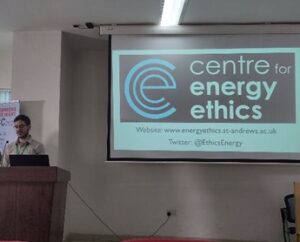
Sara Makari-Aghdam, MSt (Res) Art History, School of Art History
The graphic imagery of Parvīz Khaṭībī (b. 1922–1993) and his dissident newspaper Ḥāji Bābā, as expressions of class politics and exposing injustice (1949–1980) Sara Makari-Aghdam, MSt (Res) Art History
This trip has transformed my research, because of the unique opportunity to see in person the almost complete Haji Baba set, written and drawn by Iranian political satirist Parviz Khatibi. I spent four days, from 10am until 8pm, in Princeton University’s Marquand Special Collections, in the Firestone Library, New Jersey. It was so fruitful that I have started to rewrite two chapters, after understanding from seeing the archive that they were full of errors. If I had not visited this archive, my work would not have been thorough and would have been incorrect in places. Sadly, I did not have time to see the whole archive, and probably shall return at a later date. Similarly, I saw the surrounding presses from the Twentieth Century, some from 1943–1945 such as Baba Shamal by Reza Ganjeei (1918–1995), which really put the work into context. I absolutely loved Princeton and think it is an incredible campus and library.
Image: Khordad 1332 Panjshanbeh (14) Thursday, June 1953 ‘A Lady Without A Paspport’
Top text: “With the help of Ashi Lamar, the produce of studio Shafigh Film”. Below, top: “Latest news tells us that this film has been censored and its showings in the Cinemas of Tehran has been stopped.”
Side right: “Driver”
Below image: “Us: My sister (sissy, term of endearment for family or women you like) please don’t do anything so that they send us to Romsar (a holiday destination) again”
Zofia Guertin, PhD Candidate – Schools of Classics and Art History
I am a self-funded part-time doctoral candidate in Classics. My research focuses on the spatial and symbolic relationships between Egyptian cults and material culture in Graeco-Roman cities. Through this analysis, I ask what benefits the elites and non-elites gained with new spaces and ritual materials, and what do my study sites and monuments add to the existing religious culture. I am contributing to the scholarship that considers networks and complexity in the Hellenistic period of Greece, and scholarship on space and place as represented by pan-Mediterranean religious landscape interactions. These cult centres were prevalent throughout the Mediterranean. To adequately answer questions posed by my work, visiting many of the sites within the geographic and chronological scope of my studies is important. My field work this spring focused on the Egyptian cult presence in Crete, and mainland Greece. I submitted a table of sites with my application, and I conducted visits to all the sites listed and found further unexpected examples of relevant materials.
An important aspect of my work is the examination of topographic and environmental contexts of cult sites. In my thesis I argue that the cult sites reflect local interests and traditions but used syncretised Greek and Egyptian visual language.
To conduct this fieldwork; I went to archaeological sites, documented, and photographed sculptural and architectural finds, and neighbouring cult sites. I am currently writing the chapter on Crete, so photos and analysis are immediately being applied to my thesis. Studying ancient history is a discipline that requires visiting sites in person. Landscapes influenced the lives of people in antiquity, and nuanced how distance and topographies are intricately part of the stories of antiquity.
The timing of my arrival was incredibly fortuitous, as the seated Sarapis and standing Isis priestess (image 1 below) were part of a newly opened archaeological museum exhibition. The statues were previously not on display during the building process.
I am very grateful for the award of funds from the St Leonard’s College Committee. As a self-funded student, opportunities to travel are predicated on available funds and arranging time off from work, both of which are challenging. It is essential in the support of scholarship that these funds are made available, and I am grateful to have benefitted from your generosity.


Image 1 (left) seated Sarapis, standing priestess of Isis from the sanctuary of Gortyn, Archeological Museum of Mesara; Image 2 (middle): Isis, Cerabus, and Sarapis cult figures from the Sanctuary of Gortyn, Heraklion Archaeological Museum. Image 3 (right) sanctuary of Egyptian gods of Gortyn, Greece
Ceri Holloway, MLitt Postcolonial and World Literature, School of English
As an MLitt Postcolonial and World Literatures students writing a dissertation on cookbook-memoirs, I received funding through this award to purchase an online ticket to the Oxford Food Symposium. This enabled me to access all the content of the conference, including papers, slideshows, and forums throughout the duration of the in-person event and two weeks after. I had been wanting to attend this symposium for a few years, and even though I was not able to go in-person to Oxford, the ability to participate in this online gave me valuable insight into current scholarship in food studies.

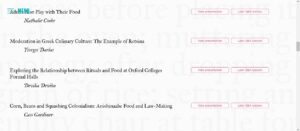
These screenshots above show the kinds of papers that were the subjects of the talks at the in-person conference. I was able to download all of them for future use.
Although the papers were not directly related to my dissertation, which examined two recently published cookbook-memoirs featuring Pakistani and Sri Lankan cuisine, the viewpoints and critical frameworks discussed in many of the papers informed my writing process. Having this broad view of contemporary food studies helped me situate my study in relation to the intersection of food/literary/postcolonial fields. Also, the conference ticket provided access to the online Bloomsbury Food Library, which I consulted for its digital resources on Global Food History. Without this funding from St Leonard’s, I would not have been able to access so much great new material, and I believe my dissertation work hugely benefitted from it.
Suzuka Komatsu, PhD Candidate, School of Philosophical, Anthropological and Film Studies
St Leonard’s College Postgraduate Travel Award has enabled me to give a presentation at the annual conference of The International Association for the Philosophy of Time (hereafter IAPT) from 27 to 30 July 2023 held in Sydney, Australia (the link for the conference schedule and abstracts is here: https://www.centrefortime.org/the-iaptconference-2023).
Since this travel award is open to the postgraduate students at any level of study and schools at St Andrews, and it has no geographical restriction for a research travel, it was suitable for my situation of travelling to Australia. It helped me decrease the major expense of my travel.
Presenting at the IAPT conference with the help of St Leonard’s Postgraduate Travel Award was beneficial for my research and professional development. The paper I presented at the conference is part o my PhD thesis. Importantly, this conference was a subject-specific conference, namely the Philosophy of Time, therefore I was able to get feedback about specific points in my paper from the fellow students and the leading philosophers in my field. Also, I have just finished the first year of my PhD in St Andrews; and it was a great opportunity to gain different perspectives from these who attend this conference at any early stage of my PhD so that I could have enough time to polish my paper by the end of my programme. Further, this conference is a conference created primarily for professionals, and presenting in from of leading philosophers provided a challenging but rewarding experience.
With regard to professional development, attending this conference was quite beneficial for me in terms of networking. This conference’s purpose is to encourage researchers to exchange information and to collaborate in joint projects internationally, an I expected to have an opportunity for collaborative work with the participants of this conference. I had a conversation with one of the presented about her work during the conference, and we have decided to meet up on zoom to discuss a possible collaborative work. This opportunity was great for me because there are not many researchers in my department who work on a similar topic.
Overall, St Leonard’s Postgraduate Travel Award has supported my research and professional development greatly in that it enable me to give a talk at the IAPT conference. I think I made the most of the opportunity that this travel award has provided. I am grateful that I was able to get this award for my travel and that here is such a travel award which is open for almost all the postgraduate students.
Samuel Woodall, MLitt Intellectual History, School of History
Unveiling the Past: My Journey through Reformation/Counter Reformation Thought
As I set out on my journey to explore the intricacies of reformation and counter-reformation thought for my dissertation, I was fully aware that textbooks and digital archives could only take me so far. It was through interactions with academics and physical material at Penryn Campus and the Warburg Institute in London, that I truly began to unravel the layers of
history and ideas that defined this era. In this pursuit, I am grateful that the travel fund made it possible.
Penryn Campus: Where History Resides
Penryn Campus, nestled in the picturesque landscape of Cornwall, became my first destination. Here I was gathering materials that would breathe life into my research. The money granted for my project allowed me to make multiple trips to this location. My goal was to not just collect materials but to connect with my early modern academic from my
undergraduate days. This was indeed fruitful. It was a great enabler to discuss my dissertation with someone who had first opened the door to the intellectual debates I was now exploring.
The fund covered my travel expenses, accommodation, and sustenance in the Duchy. I also collected books, manuscripts, and documents that would form the backbone of my dissertation. Penryn Campus transformed my research from abstract concepts to tangible pieces of history, enriching my project in ways I had not anticipated.
The Warburg Institute: A Temple of Knowledge
Next stop, London, where the Warburg Institute beckoned with its reputation as a hub for intellectual history. For me, this was a pilgrimage to a shrine of knowledge. The funds allotted to my research venture ensured that I could explore the Warburg Institute thoroughly. The resources available were awe-inspiring – specialized libraries, scholarly expertise, and an environment that supported my intellectual development.
Immersing myself in the institute, I delved deep into the philosophical, religious, and artistic currents that characterized the reformation and counter-reformation periods. The money allowed me to access rare manuscripts and even engage in discussions with renowned scholars. My time here at the Warburg Institute was a revelation, and I left with a wealth of
insights that would significantly shape the depth and breadth of my dissertation.
Conclusion: Investing in Knowledge
In retrospect, the money allocated to my research journey was an investment in knowledge. The visits to Penryn Campus and the Warburg Institute transformed my dissertation from an academic exercise into a lived exploration of reformation and counter-reformation thought. I am profoundly grateful for the travel fund that made these journeys possible, for it was this support that allowed me to explore, experience, and truly understand the essence of reformation and counter-reformation thought.
Alba Barrera, PhD Candidate, Department of Chinese Studies, School of Modern Languages
My name is Alba Barrera. I am a second year PhD student in the department of Chinese Studies. My area of research focuses on Sino-Hispanic literary and cultural contact during the first half of the twentieth century. As a recipient of the St Leonards College travel award, I received funding which enabled me to travel to Taiwan and successfully complete a three-month summer placement. I benefited from this experience in many ways.
My travels to Taiwan allowed me the opportunity to conduct research relevant to my field of study at various institutions, including Tamkang University and Taiwan’s most preeminent research institution, Academia Sinica. While there I also had the opportunity to attend an academic conference organised by the Asociación Taiwanesa de Hispanistas [Taiwanese Association of Hispanists], as well as a two-day workshop (“Workshop for Young Sinologist”) hosted by the Center for Chinese Studies at the National Central Library of Taiwan, who recently signed a cooperation agreement with the University of St Andrews library. During my three months in Taiwan, I visited many sites of cultural significance and in conjunction with my classes, which I attended daily, I learned about Taiwan’s complex colonial history, languages, cultures, and literature.
My travels to Taiwan have had a significant impact on my studies. To name but one example, I have recently been accepted to present my work at a conference in November 2023. The paper proposed is based on archival research conducted during my summer placement in Taiwan.
I would like to express my gratitude to St Leonards College for funding my travels.
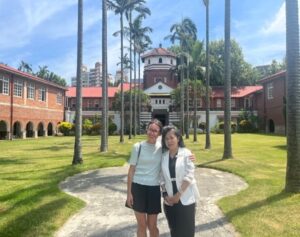

Image 1 (left): With Brenda Chen at Tamkang High School – a school founded by the son of Dr Mackay, a Presbyterian missionary in 19th Century Taiwan. The School if home to the first school for girls in Taiwan.
Ciarán Mac Domhnaill, PhD Candidate, Department of Economics and Finance, Business School
I am grateful to St Leonard’s College for presenting me with a Travel Award of £125. This funding was put towards my travel to Cartagena, Colombia, where I had the opportunity to present the first chapter of my PhD research at the 2023 Meeting of the Society for Economic Dynamics.
In this PhD chapter, titled ‘Driving over the hill: Car intensity during structural transformation’, I look at how the role of cars in the economy changes as the economy gets richer. Rather than comparing countries on a per capita basis, I focus on the number of cars required to produce one dollar of economic output, or car intensity. I find that car intensity evolves in a hump-shaped pattern as the economy develops, increasing before reaching a peak and later decreasing. This work will contribute to important research on whether car use has peaked in the developed world, and whether transport is becoming more sustainable.
The Society for Economic Dynamics Annual Meeting is a prestigious international economics conference, and this year’s Meeting was a fantastic platform on which to disseminate some of my PhD research. It was also an opportunity to receive feedback from top academics in the field of macroeconomics, and I have since been able to further develop my PhD chapter based on these comments and suggestions.
The conference took place over three days from 29 June to 1 July. In addition to presenting my own research, I had the chance to attend many other presentations and to get a sense of the research currently taking place at the cutting edge of macroeconomics. The conference also allowed me to develop my network of academic contacts, with various social events organised for participants.
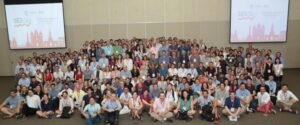
Conference participants of the Society Dynamics Annual Meeting 2023, Cartagena, Columbia
Rachel Humann, PhD Candidate, School of Chemistry
The funding from the St Leonard’s College travel award has helped allow me to attend a 7 week advanced traning course on the modern approaches to research in parasitology in Wood Hole Marine Biological Laboratories. Not only have I been able to meet and research with other fantastic students, but it has also enabled me to meet some very prominent researchers in the field who lectured and taught new lab techniques. This course has given me new ideas and motivation for my own research as well as directly leading to multiple post-doctoral opportunities. I am hugely grateful to St Leonard’s College for helping with the funds to have this experience.
Emily Page, PhD Candidate in Hebrew Bible, School of Divinity, St Mary’s College
Thank you very much for your gracious support of my research! With the help of the travel award, I was able to attend the Society of Biblical Literature Annual Meeting where I presented two papers relating to my studies. The first paper was a shortened version of what will ultimately be chapter 3 of my PhD thesis, and the second paper was an expansion of a smaller section in chapter 4 of my PhD thesis. By presenting these papers, not only was I able to further refine my PhD project, but I was also able to network with my peers and present myself as a scholar in my particular focus. After presenting each paper, I was then approached by senior scholars in the field who encouraged me to publish my papers and emphasized to me the value of my work for the field. My attendance at SBL this year showed immediate fruit, and I am encouraged enough to believe that it will also bear fruit further into my career.
